Why Does Handmade Soap Sweat? Understanding Glycerin Dew
-
Posted by
Allison Savino
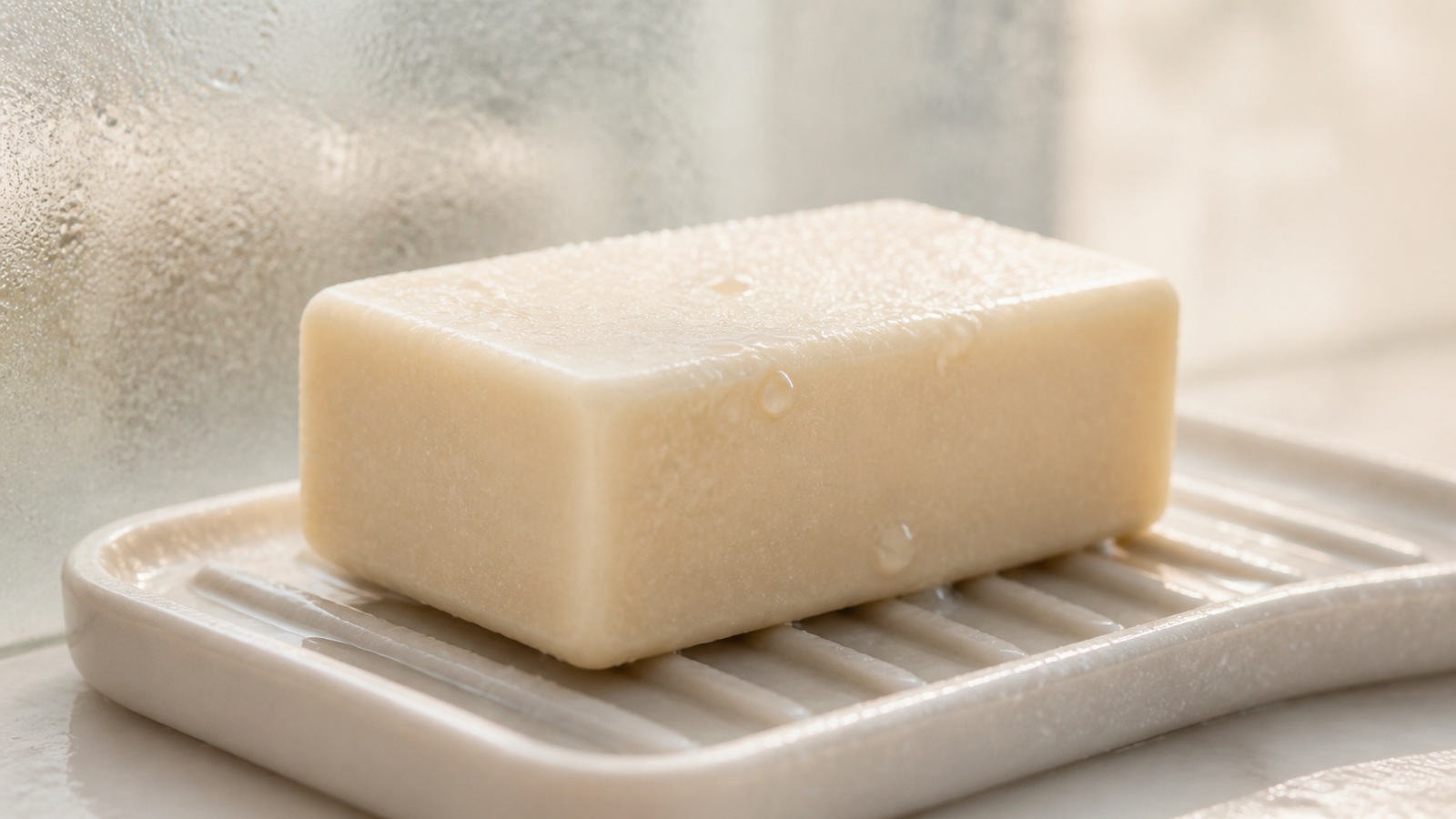
A handmade soap bar can look perfectly dry one day and slightly glossy the next. In very humid weather, you may even see tiny beads of moisture sitting on its surface.
It looks a little like the soap is sweating. The name commonly used for it is glycerin dew, and after a hot, humid summer, it is a timely bit of soap chemistry to understand.
The short version: your soap is probably not melting, leaking oil, or going bad. The droplets are usually moisture from the surrounding air gathering on the surface of the bar.
Why handmade soap contains glycerin
Traditional soap begins with fats or oils and a carefully measured alkali solution. During saponification, those starting ingredients are transformed into soap. The FDA describes ordinary soap as the material produced when fats or oils combine with an alkali such as lye.[1]
Glycerin, also called glycerol, forms naturally during this soapmaking reaction and remains in many handmade bars. It is a clear, water-compatible compound with three hydroxyl groups in its structure.[2] If you would like the longer ingredient story, our guide to glycerin in handmade soap explains how it forms and what it contributes to a finished bar.[4]
This naturally occurring glycerin is part of what makes traditional soap interesting. It also explains why a bar can react visibly to humid air.
What is glycerin dew?
Glycerin is hygroscopic. In plain English, it has an affinity for water and can attract moisture from its surroundings.[3]
When the air around a soap bar contains a great deal of water vapor, moisture can collect at the bar’s surface. That moisture may appear as a light sheen, a few clear droplets, or a slightly tacky layer. This is glycerin dew.
The bar is not “sweating out” its glycerin. The better description is that water in the air is gathering at the surface because glycerin is water-attracting.
You may notice glycerin dew more easily on clear or high-glycerin soap bases, but opaque cold-process bars can also become damp or tacky when humidity is high. The amount varies with the formula, the surrounding air, how the bar was stored, and whether it had a chance to dry between uses.
Why summer makes it more noticeable
Heat often gets blamed, but humidity is the main actor.
A hot summer can bring long stretches of moisture-heavy air. Bathrooms add another layer: hot showers create steam, closed doors limit circulation, and a wet bar may sit in a dish that never fully dries. Even an unused bar can develop surface moisture if it is stored in a humid room.
Temperature changes can make the effect more obvious too. Moving soap between a cool, air-conditioned space and warm, damp air may encourage condensation on the surface.
So yes, your soap may look as though it has finished a vigorous workout. In reality, it has simply been sitting in a bathroom while August behaves badly.
Is a sweating soap bar still usable?
In most cases, a few clear droplets or a light tacky film during humid weather is a storage issue, not a sign that the bar has spoiled.
Blot the surface gently with a clean, dry cloth or paper towel and move the bar somewhere with better airflow. If it otherwise looks and smells normal, it can usually return to regular use.
Use common sense if something seems different from ordinary glycerin dew. A strong off odor, unusual discoloration, fuzzy growth, or a major change in texture deserves a closer look. Set the bar aside and contact the maker if you are uncertain.
How to reduce glycerin dew
You cannot control the weather, but you can make the soap’s surroundings less inviting to surface moisture.
Let the bar drain
Use a slotted soap dish or another surface that keeps the bar out of standing water. A flat ledge may look tidy, but it traps water underneath and keeps one side of the soap soft.
Give it air
Place the dish where air can move around the bar. If your bathroom stays steamy for hours, run the exhaust fan, open the door after showering, or move the soap to a drier spot between uses.
Keep unused bars somewhere dry
Store extra bars in a cool, dry area away from shower steam, windowsills, and direct sunlight. A linen closet or bedroom drawer is often a better choice than the bathroom cabinet.
Avoid sealing a recently used, wet bar inside a travel tin. Let it dry first. Trapped water creates a soft, messy bar far faster than ordinary glycerin dew does.
Blot rather than scrub
If droplets appear, gently blot them away. There is no need to rinse an unused bar or scrape its surface. A dry cloth and a less humid location are usually enough.
Rotate two bars
In a busy household, rotating between two soaps gives each bar more drying time. It is a small habit, but it can help handmade soap stay firmer and last longer.
Glycerin dew is normal chemistry, not a soap emergency
A little surface moisture tells you more about the air around the soap than it does about the quality of the bar.
Handmade soap naturally contains glycerin. Glycerin attracts water. When summer air becomes heavy with humidity, tiny droplets can appear. Once you know the sequence, the mystery disappears.
Keep your soap elevated, let it breathe, and store unused bars somewhere dry. Your bar does not need an intervention. It needs a draining dish and perhaps a stern word with the weather.
Explore Plumera’s handmade bar soaps or read more about what glycerin is and how it forms in traditional soapmaking.