What Is Arrowroot Powder in Clean Beauty? A Simple Texture Guide
-
Posted by
Allison Savino
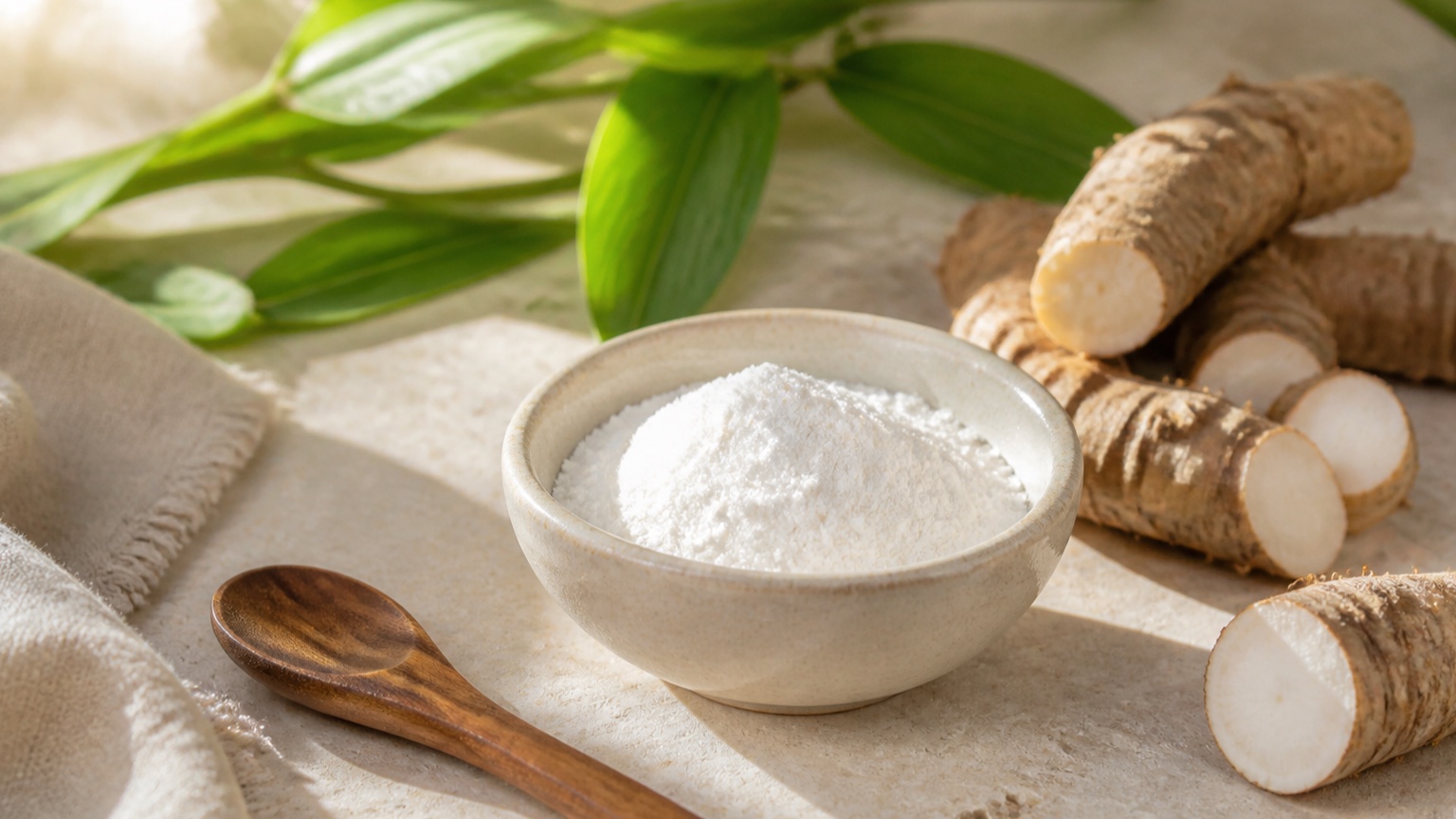
Some clean beauty ingredients are easy to picture: golden plant oils, rich butters, fragrant herbs. Arrowroot powder is quieter. It is pale, fine, almost weightless—and its most useful work often happens in the way a formula feels.
In balms, body powders, solid deodorants, and other waterless formats, arrowroot powder can help create a smoother, less heavy finish. It is not the star of every formula, but it is a thoughtful supporting ingredient when texture matters. Here is what arrowroot powder is, why makers use it, and what to notice on a clean beauty label.
What is arrowroot powder?
Arrowroot powder is a fine starch traditionally obtained from the rhizomes of tropical plants, most commonly Maranta arundinacea. The rhizome is an underground plant stem that stores starch. Once the starch is separated, washed, and dried, it becomes the soft white powder used in food, personal care, and handmade formulations.
On a cosmetic ingredient list, arrowroot may appear as Maranta arundinacea root powder. Its role depends on the complete formula, but it is often chosen for its silky feel and its ability to take up a small amount of excess oil or moisture on the surface.
If you enjoy learning what the smaller names on a label actually mean, Plumera’s clean beauty ingredient guides explore plant oils, powders, clays, waxes, and other formula-building essentials.
Why is arrowroot powder used in clean beauty?
It can create a softer, drier finish
Oil-based formulas can feel beautifully rich, but not everyone wants a glossy or very slippery finish. A carefully measured amount of arrowroot powder can soften that sensation. In a balm or solid stick, it may help the finished product feel more velvety and less greasy as it spreads.
This is a sensorial choice rather than a promise about what the product will do for every person. Formula balance matters: too little may be barely noticeable, while too much can make a product feel powdery or draggy.
It supports smooth application
Fine powders can change how a solid or semi-solid formula moves across the skin. Arrowroot is often appreciated for a light, silky slip that helps a product spread in a thin, even layer. That can be useful in body powders, solid deodorants, cream-to-powder textures, and selected balm formulas.
It helps formulators shape texture without adding fragrance
Arrowroot powder has little aroma of its own. That makes it a practical texture ingredient when a maker wants the scent direction to come from other carefully selected materials—or when the goal is simply a quieter formula. It can support the structure and finish without competing with the intended sensory experience.
Where might you find arrowroot powder?
Arrowroot powder can appear in several personal care formats, including:
- Body powders: for a light, soft-focus feel on the skin.
- Solid deodorants: as part of a blend designed for a smooth, dry-touch application.
- Balms and salves: to temper an especially oily finish and add a velvety texture.
- Powdered cleansers or masks: where starch can contribute softness and blendability.
- Makeup and cream-to-powder formulas: to refine slip and finish.
Not every product in these categories needs arrowroot, and its presence does not automatically make one formula better than another. It is one tool among oils, butters, waxes, clays, and botanical powders. The complete ingredient list, proportions, and intended use create the final experience.
For a practical look at how powders fit beside oils, waxes, and butters, read our guide to waterless beauty, balms, oils, and solid bars.
Arrowroot powder vs. cornstarch and tapioca starch
Arrowroot, cornstarch, and tapioca starch can look similar in the jar, but they come from different plants and can feel slightly different in a formula.
- Arrowroot powder comes from arrowroot rhizomes and is often selected for a fine, silky finish.
- Cornstarch comes from corn and is widely used for absorbency and body in dry formulas.
- Tapioca starch comes from cassava and can add a smooth, lightweight touch.
These ingredients are not always interchangeable. A formulator considers particle feel, oil absorption, stability, application, and the texture of every other ingredient in the blend. The best choice is the one that supports the product’s intended finish.
What arrowroot powder does not tell you
Seeing arrowroot on a label does not reveal whether a product will feel rich, matte, firm, creamy, or powdery. The placement on the ingredient list offers some context, but the complete formula is what matters.
Arrowroot powder also is not a substitute for the oils, waxes, and butters that create a balm’s emollient character and structure. Think of it as a texture editor: it can refine the finish, but it does not write the whole formula.
How to shop thoughtfully for arrowroot-based formulas
- Read the complete ingredient list. Look beyond one familiar botanical name and consider the full blend.
- Choose the texture you actually enjoy. A dry-touch balm may suit your routine better than a glossy one—or the reverse.
- Follow the product directions. Powders, balms, and solid sticks are designed for different amounts and application methods.
- Start with a small amount. Concentrated and powder-rich formulas are often easiest to evaluate with a light first application.
- Notice the real experience. Slip, scent, finish, packaging, and ease of use all influence whether a product earns a regular place on your shelf.
A small ingredient with a noticeable job
Arrowroot powder is a useful example of Beauty Through Simplicity. It is not flashy, yet it can make a formula feel more polished, balanced, and pleasant to apply. For customers, understanding that role makes ingredient lists less mysterious. For makers, it is another way to fine-tune the experience without crowding a formula.
Curious about richer, concentrated textures? Explore Plumera’s plant-forward Balms & Salves collection and notice how each formula’s ingredients come together in a distinct everyday-care experience.