Why Does Handmade Soap Have Tiny Air Bubbles? A Simple Texture Guide
-
Posted by
Allison Savino
Tiny air bubbles in handmade soap can prompt a surprisingly big question: are they supposed to be there? In many small-batch bars, a few pinprick-size pockets are simply part of the making process. They can appear as little round dots on a cut face, along an edge, or just beneath the surface.
These bubbles are usually a visual detail rather than a dramatic plot twist. They reflect how soap batter was blended, poured, and settled in the mold. Understanding where they come from makes it easier to appreciate the thoughtful work—and the natural variation—behind an artisan bar.
What Are the Tiny Bubbles in Handmade Soap?
During cold-process soapmaking, plant oils and an alkaline solution are blended into a fluid soap batter. As the mixture comes together, a maker may introduce small pockets of air. Some rise out before the soap firms, while others remain suspended in the loaf.
Once the loaf is unmolded and cut, those trapped pockets can show up as tiny circles or shallow dimples. They may be scattered across a bar or clustered in one small area. Their size and placement depend on the batter’s texture, the mixing method, and the timing of the pour.
If you are curious about the point when fluid oils become pourable soap batter, our guide to trace in handmade soapmaking explains that important stage.
Why Air Pockets Form in Soap Batter
1. Mixing Can Pull Air into the Batch
A stick blender helps combine the ingredients efficiently, but its bell-shaped head can trap air if it is lifted above the surface or moved too quickly. Those small bubbles may stay in the batter, especially as the mixture begins to thicken.
Experienced makers often keep the blender head submerged, use short pulses, and alternate blending with gentle stirring. Even with careful technique, a handmade batch is not an industrially vacuumed mixture. A few tiny bubbles can still make an appearance.
2. Thicker Batter Holds Bubbles More Easily
Soap batter changes texture as it moves through trace. A thin, fluid batter gives air more time to travel upward. A thicker batter is less willing to let those pockets escape. Scent, temperature, recipe design, and decorative plans can all influence how quickly the mixture thickens.
This is one reason two batches made from the same formula can look slightly different. The maker may be working with the same ingredients while responding to a batter that moves at its own pace that day.
3. Pouring and Layering Create Movement
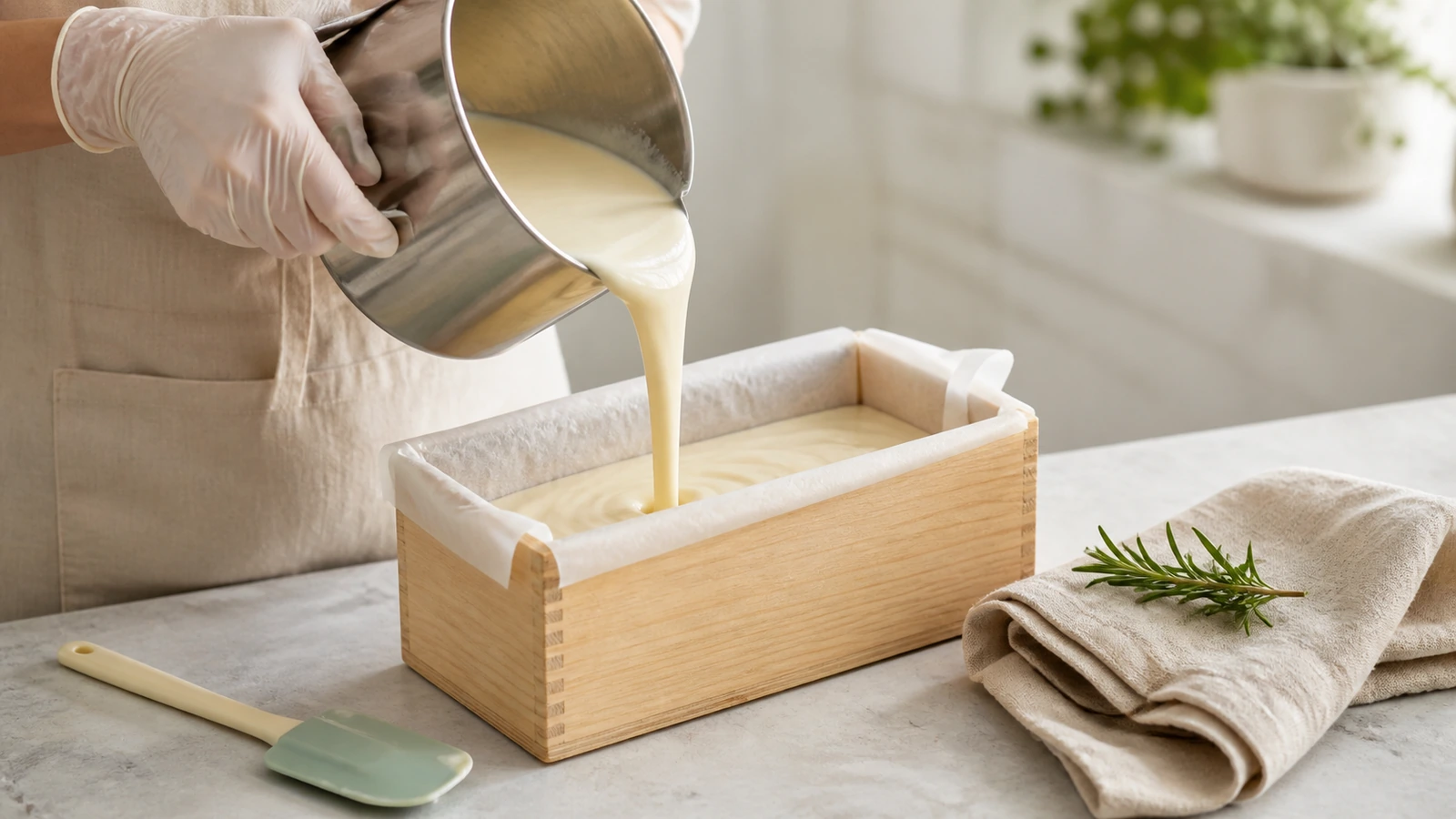
Pouring batter into a loaf mold, adding layers, or creating swirls can fold small amounts of air into the design. Makers often tap the filled mold gently against the work surface to encourage bubbles to rise. That step helps, but it cannot guarantee a completely pore-free bar.
The goal is a well-made bar with an intentional formula and a pleasing daily-use experience—not a piece of factory-perfect plastic. Handmade soap gets to look handmade.
Are Tiny Air Bubbles a Sign of Poor Quality?
A few small, smooth-edged air pockets do not automatically signal poor workmanship. They are generally a cosmetic feature created during mixing and pouring. Bar quality is better considered through the full picture: a thoughtfully balanced formula, an appropriate resting period, clear ingredient information, a pleasant aroma, and a bar that performs as intended.
Large tunnels, sharp cavities, crumbling areas, or an unusual wet interior are different from a handful of tiny surface dots. If a bar looks significantly different from the maker’s photos or arrives damaged, reaching out to the maker is always reasonable. Small businesses can usually identify a batch detail quickly and offer product-specific guidance.
Air Bubbles vs. Natural Bar Variation
Not every mark on a handmade bar is an air bubble. Botanical pieces, mineral colorants, salt, textured tops, swirls, and hand-cut edges can all create visual changes. Natural ingredients may also shift slightly from batch to batch.
Our overview of why handmade soap bars look different explores these small-batch details more broadly. The short version: close resemblance matters, but perfect clones are not the point of artisan making.
What to Look for When Choosing Handmade Soap
Rather than searching for a completely flawless surface, look for information that helps you choose confidently:
- A complete ingredient list: You should be able to see what is in the bar before buying.
- A clear scent description: Fragrance families such as citrus, floral, herbal, minty, or woodsy make online selection easier.
- Thoughtful photos: Images should show the bar’s shape, color, texture, and approximate scale.
- Simple care directions: Good drainage between uses helps a handmade bar stay firm and ready for the next wash.
- A responsive maker: Small-batch shopping should make questions feel welcome.
How to Care for a Bar with Tiny Air Pockets
No special routine is needed for a bar with a few tiny bubbles. Use it with water, allow it to dry between uses, and keep it away from a constant puddle. A draining dish or soap saver can help air circulate around the bar.
As the soap is used, shallow pockets will simply wear away with the surrounding surface. The bar’s changing shape is part of its useful life—from crisp first edge to the last little sliver.
Small Details, Thoughtfully Made
Tiny air bubbles are one of the quiet fingerprints of small-batch soapmaking. They tell a simple story about real ingredients being mixed, poured, cut, and finished by hand. A few pinpricks do not make the ritual less lovely; if anything, they are a reminder that a person—not an assembly line—made the bar.
Ready to find a bar for your sink or shower? Explore Plumera Essentials’ handcrafted bar soap collection and choose the scent and style that fit your everyday routine.
Beauty Through Simplicity — Better for you & better for the environment.