
Sea Salt in Handmade Soap: A Simple Ingredient Guide
-
Posted by
Allison Savino
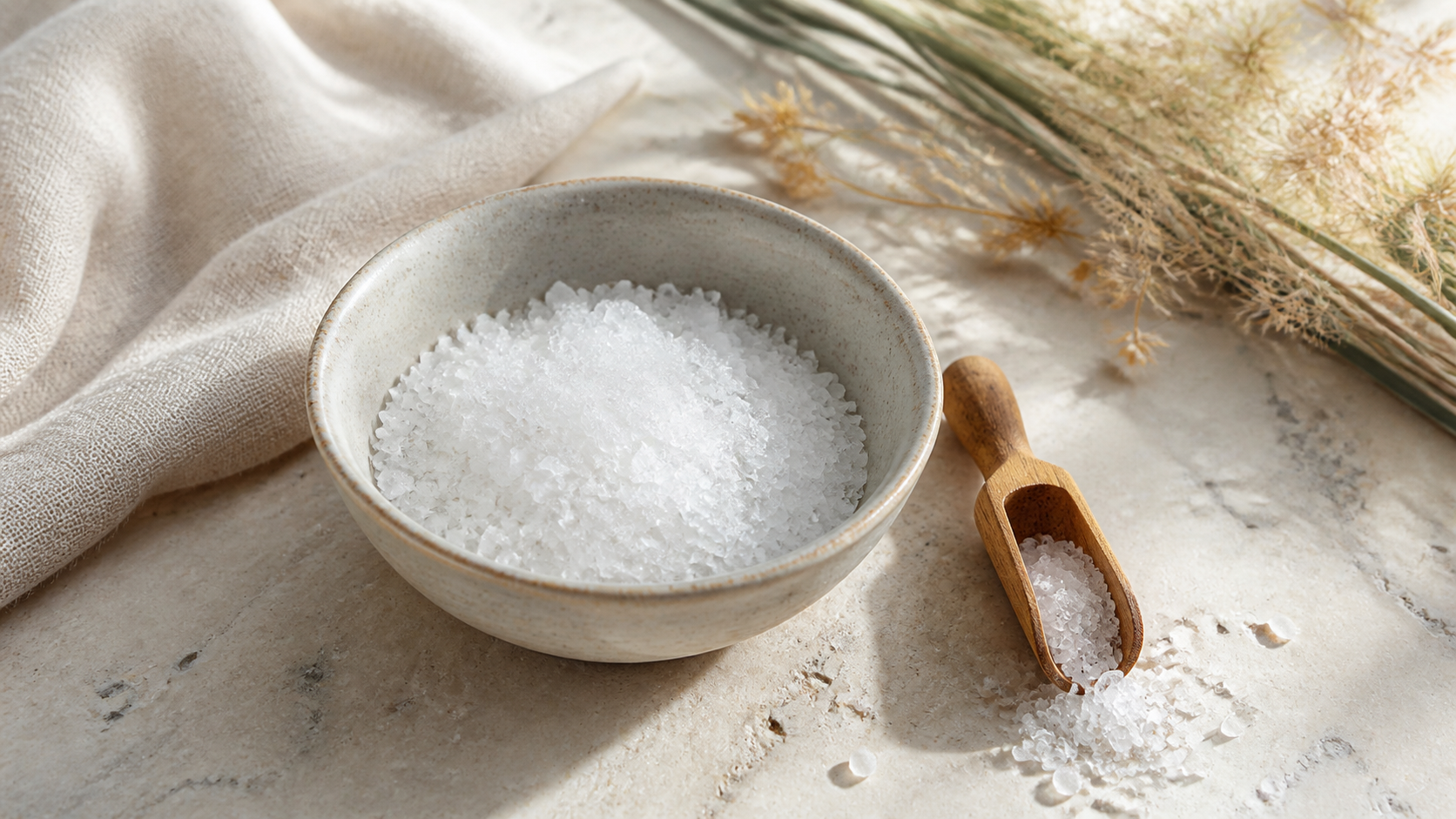
A pinch of sea salt can look wonderfully simple on an ingredient list, yet it can influence a handmade soap recipe in several noticeable ways. Depending on how much a maker uses and when it enters the batch, salt can help shape a bar’s firmness, texture, appearance, and lather.
That does not mean every salt soap is the same. A small amount added to a traditional formula is very different from a bar built around a high proportion of salt. The complete recipe still matters: the blend of plant oils, water, scent, color, batch temperature, mold, and resting time all work together. Here is a clear look at what sea salt does in handmade soap—and what to notice when choosing and caring for a finished bar.
What Is Sea Salt?
Sea salt begins with seawater and is collected after the water evaporates. In soapmaking, makers may choose fine or coarse crystals depending on the formula and the effect they want. The crystals can be dissolved before they are mixed into the soap batter, or they may remain visible as a textural detail in a carefully designed bar.
The phrase “sea salt soap” can describe more than one style. Some recipes use a modest amount of salt as one small part of the formula. Others use enough salt to create a distinctly dense, mineral-inspired bar often called a salt bar. Because the amount makes such a difference, the ingredient name alone does not tell the whole story.
Why Do Soapmakers Add Sea Salt?
To Create a Firmer Bar
Salt can encourage a cold-process soap batter to become firm more quickly. That can help a finished bar feel dense and substantial, but it also changes the maker’s timing. A high-salt loaf may need to be cut sooner than an ordinary loaf so it does not become too brittle for clean slices.
Firmness also comes from the oil formula and the time the bar spends resting after it is made. Our guide to why handmade soap uses a blend of oils explains how those ingredients work together to shape structure, lather, and everyday feel.
To Shape Texture and Appearance
Finely dissolved salt may create a smooth, compact look. Visible crystals can add a coastal, stone-like, or softly speckled finish. The final appearance depends on crystal size, color, the amount used, and whether the salt is incorporated throughout the batter or reserved for a decorative top.
A beautiful texture should still feel intentional in use. Large, sharp crystals are better suited to visual styling than direct scrubbing. Thoughtful makers consider how each detail will feel once the bar is wet, not only how it photographs on the shelf.
To Create a Distinct Lather Experience
Salt changes how a soap formula lathers. In larger amounts, it can reduce big, airy bubbles, so makers often adjust the plant-oil blend to support a satisfying wash. The result may feel denser and creamier rather than dramatically foamy.
This is a useful reminder that more bubbles do not automatically mean a better bar. Water hardness, how wet the soap becomes, and whether you lather it in your hands or against a washcloth can all change what you see. A balanced salt bar is designed as a complete formula, not as ordinary soap with crystals sprinkled in at the last minute.
Sea Salt Soap vs. a Regular Handmade Bar
A traditional handmade bar can be firm, colorful, richly scented, and beautifully bubbly without containing salt. A salt-forward bar usually feels heavier and more compact, with a smoother or stone-like character. Neither style is automatically superior; they simply offer different sensory experiences.
Choose by the details that matter to your routine:
- Texture: Do you prefer a smooth bar or one with visible mineral character?
- Lather: Are you drawn to lively bubbles or a denser, creamier foam?
- Scent: Fresh citrus, herbs, woods, and florals can each give the mineral theme a different mood.
- Size and shape: A dense bar can feel different in the hand, so comfortable dimensions matter.
- Ingredient clarity: Read the complete list rather than judging the bar by one featured ingredient.
Does Sea Salt Make Soap “Better”?
No single ingredient makes a handmade soap universally better. Sea salt is a formulation choice, not a shortcut to quality. A successful bar depends on measured proportions, a compatible oil blend, careful timing, and enough resting time before it reaches the customer.
It is also worth separating ingredient story from product promises. Salt may bring texture, firmness, and a distinctive lather profile to a bar, but it does not turn everyday soap into a medical product. The most useful description is the honest one: how the bar looks, feels, smells, lathers, and fits into a simple washing routine.
How to Care for a Salt Bar Between Uses
Like other handmade soaps, a salt bar appreciates airflow. Rinse away loose lather, place the bar on a draining dish or saver, and let it dry instead of leaving it in pooled water. A little breathing room helps preserve its firm texture and keeps the sink or shower looking tidy.
Humidity can slow surface drying even when a bar is naturally dense. For practical bathroom setup ideas, see our guide to keeping handmade soap dry in humid weather.
A Simple Ingredient With Plenty of Craft Behind It
Sea salt brings an appealing contrast to handmade soap: the ingredient is familiar, but using it well takes precision. Makers must balance crystal size, salt level, oil selection, cutting time, and resting conditions to create a bar that looks intentional and works comfortably in an everyday routine.
If you enjoy discovering how small-batch formulas can change the feel of a familiar ritual, explore Plumera’s handmade bar soap collection. You will find bright, floral, minty, sweet, and woodsy options made to turn an ordinary sink or shower into something a little more considered.
Beauty Through Simplicity — Better for you & better for the environment.