What Is Vegan Handmade Soap? A Simple Ingredient Checklist
- Posted by
Allison Savino
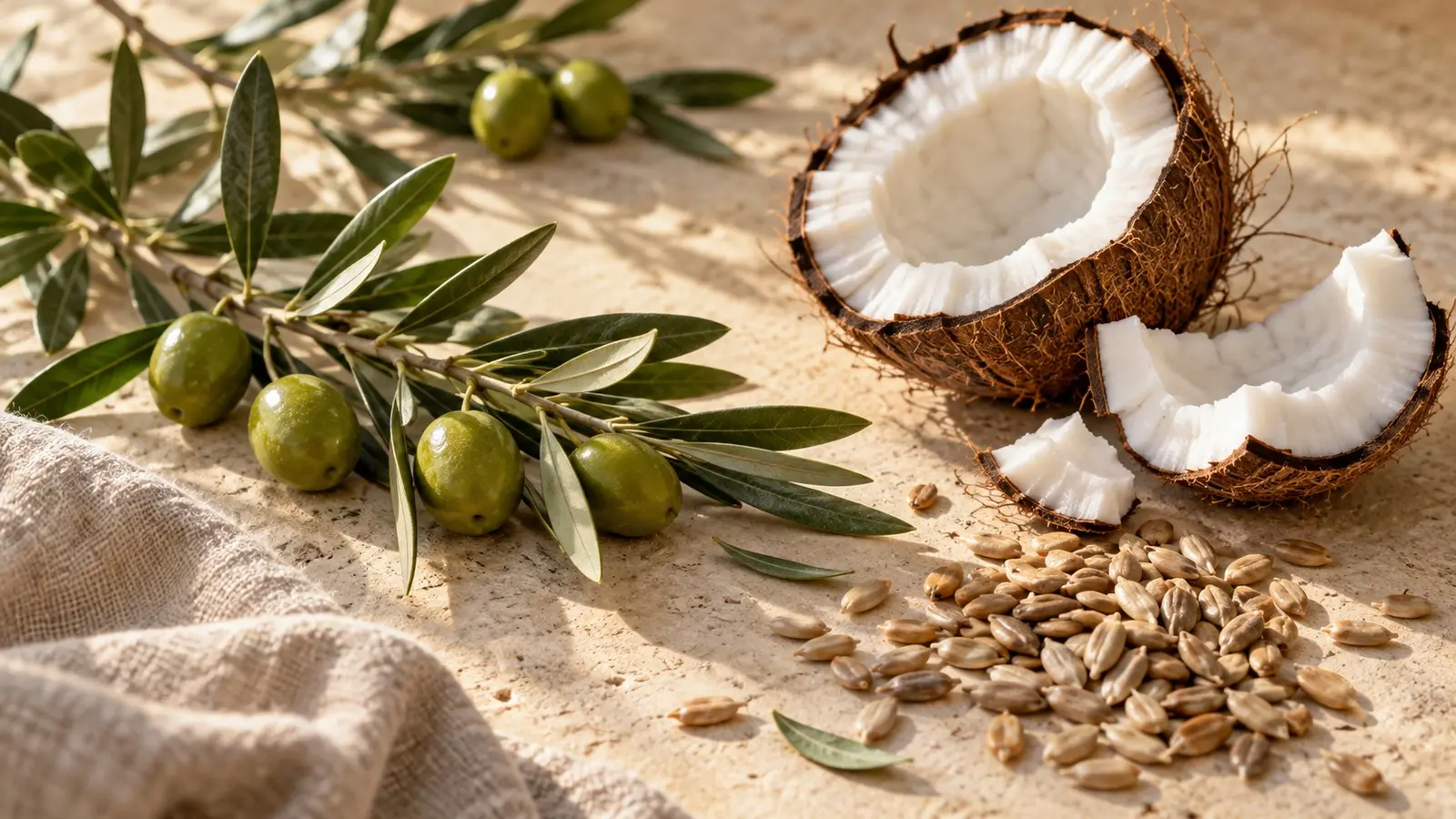
A bar can look beautifully botanical and still contain an animal-derived ingredient. Olive leaves on the wrapper, a coconut scent, or the word “handmade” may tell you something about its style, but none answers the whole question: is this soap vegan?
Vegan handmade soap starts with an animal-free ingredient formula. If you also want assurance about animal testing and production practices, look for clear information from the maker or a relevant independent certification. This guide explains which ingredients deserve a closer look, why familiar beauty terms are not interchangeable, and how to choose a bar without guessing from the packaging.
What makes handmade soap vegan?
A vegan soap formula excludes animal-derived ingredients. That includes the fats used to make the soap and the smaller additions that contribute scent, color, or texture. A bar made with plant oils can still include milk or honey, so checking only the first few ingredients is not enough.
Vegan certification can go beyond the finished ingredient list. For example, The Vegan Society’s explanation of vegan beauty standards covers both animal-derived ingredients and animal testing within the scope of its standard. When you see a certification mark, check which organization issued it and what that particular standard covers. A botanical illustration is not a certification.
Ingredients to look for on a soap label
Start with the complete current ingredient list for the exact bar and variant you are considering. These familiar soapmaking ingredients are useful places to begin, rather than a complete ingredient dictionary.
Animal-derived fats and additions
- Tallow and lard: These are animal fats used in some traditional soap recipes. They are not vegan ingredients.
- Milk: Goat milk and other dairy milks come from animals. Coconut milk and oat milk are different ingredients, so read the full name rather than stopping at “milk.”
- Honey and beeswax: Both come from bees and are excluded from vegan formulas. Beeswax may appear under the name Cera Alba.
- Lanolin: This ingredient comes from sheep’s wool and is another animal-derived material to recognize.
The point is to identify what fits your preferences, not to rank every ingredient on one universal scale. A traditional tallow bar and a plant-oil bar represent different formulation choices. Clear information lets you choose deliberately.
Plant oils are a starting point, not the whole answer
Olive, coconut, sunflower, and castor oils are examples of plant-derived soapmaking oils. Shea and cocoa butters also come from plants. Their presence can help you understand a formula’s base, but it does not confirm that every other ingredient meets a vegan standard.
Some labels describe the starting oils, while others use names for the resulting soap ingredients. If that wording is unfamiliar, ask the maker to explain it. There is no need to turn an ordinary shopping decision into an evening of decoding every syllable.
What if an ingredient’s source is unclear?
An ingredient name does not always disclose its original source. Glycerin and stearic acid, for example, can have different sources. A short question to the maker is more useful than assuming that an unfamiliar name means animal-derived—or that a familiar one guarantees plant-derived.
Try asking: “Is this specific bar made without animal-derived ingredients, including its color and scent ingredients?” If production practices matter to your choice, ask about those separately. A helpful answer should refer to the actual formula, not simply repeat the words natural or handmade.
Recheck when you reorder a different scent or buy a gift set. One confirmed bar does not establish the ingredient status of every item from the same maker.
Vegan, plant-based, and cruelty-free: different questions
These descriptions often appear together, but they should not do one another’s work. “Plant-based” points toward botanical ingredients. “Vegan” addresses animal-derived ingredients and, under standards such as The Vegan Society’s, relevant animal-testing and production practices. “Cruelty-free” generally concerns animal testing; it does not by itself establish that a formula contains no animal-derived ingredients.
Likewise, “handmade” describes how a product is made, not the origin of every material. “Natural” does not exclude animal ingredients. For a broader look at botanical language, our guide to what plant-based skincare means explains why the complete formula matters more than a single front-label phrase.
Does vegan soap have one particular feel or scent?
No. Vegan describes ingredient and ethical criteria, not a single texture, color, or fragrance family. Two animal-free formulas can feel quite different because their oil blends, proportions, and other ingredients differ. One may have a dense, creamy lather; another may feel lighter and more bubbly.
Choose your preferred experience after checking the ingredient information. Read the product description for texture and scent details. Vegan does not automatically mean unscented, and a floral or woodsy aroma does not tell you whether the whole formula is vegan.
A simple checklist before you buy
- Read the ingredient list for the exact product and scent.
- Look beyond the plant oils for milk, honey, beeswax, and animal-derived fats.
- Ask about any ingredient source you cannot establish.
- Review the maker’s stated practices or the scope of a genuine certification.
- Then choose the scent, bar format, and everyday feel you enjoy.
If you are buying a fall birthday or holiday gift, ask whether the recipient has a particular certification preference. Keep the original ingredient information with the bar, and check every item in a mixed gift rather than extending one product’s description to the entire box.
Choose with clarity, then keep it simple
Browse Plumera Essentials’ handmade bar soap collection to explore individual formulas and scents. The collection includes different ingredient choices; this guide is not a blanket vegan claim for Plumera products. Check each current listing and ask about any details that matter to your purchase.
A thoughtful choice does not require a crowded shelf or an impressive vocabulary. It requires a clear ingredient list, a few useful questions, and a bar that fits your routine. That is Beauty Through Simplicity in practice.