What Does Plant-Based Skincare Mean? A Simple Clean Beauty Guide
-
Posted by
Allison Savino
“Plant-based skincare” sounds wonderfully straightforward: plants go in, thoughtful beauty products come out. In practice, the phrase covers a wide range of formulas, ingredient choices, and brand philosophies. Some products lean almost entirely on botanical oils and butters, while others combine plant-derived ingredients with minerals, waxes, or carefully selected functional ingredients.
That does not make the term meaningless. It simply means the best way to shop is to look beyond the front label. Understanding what plant-based skincare usually means—and what it does not promise—makes it easier to build a routine that feels simple, intentional, and right for you.
What does plant-based skincare mean?
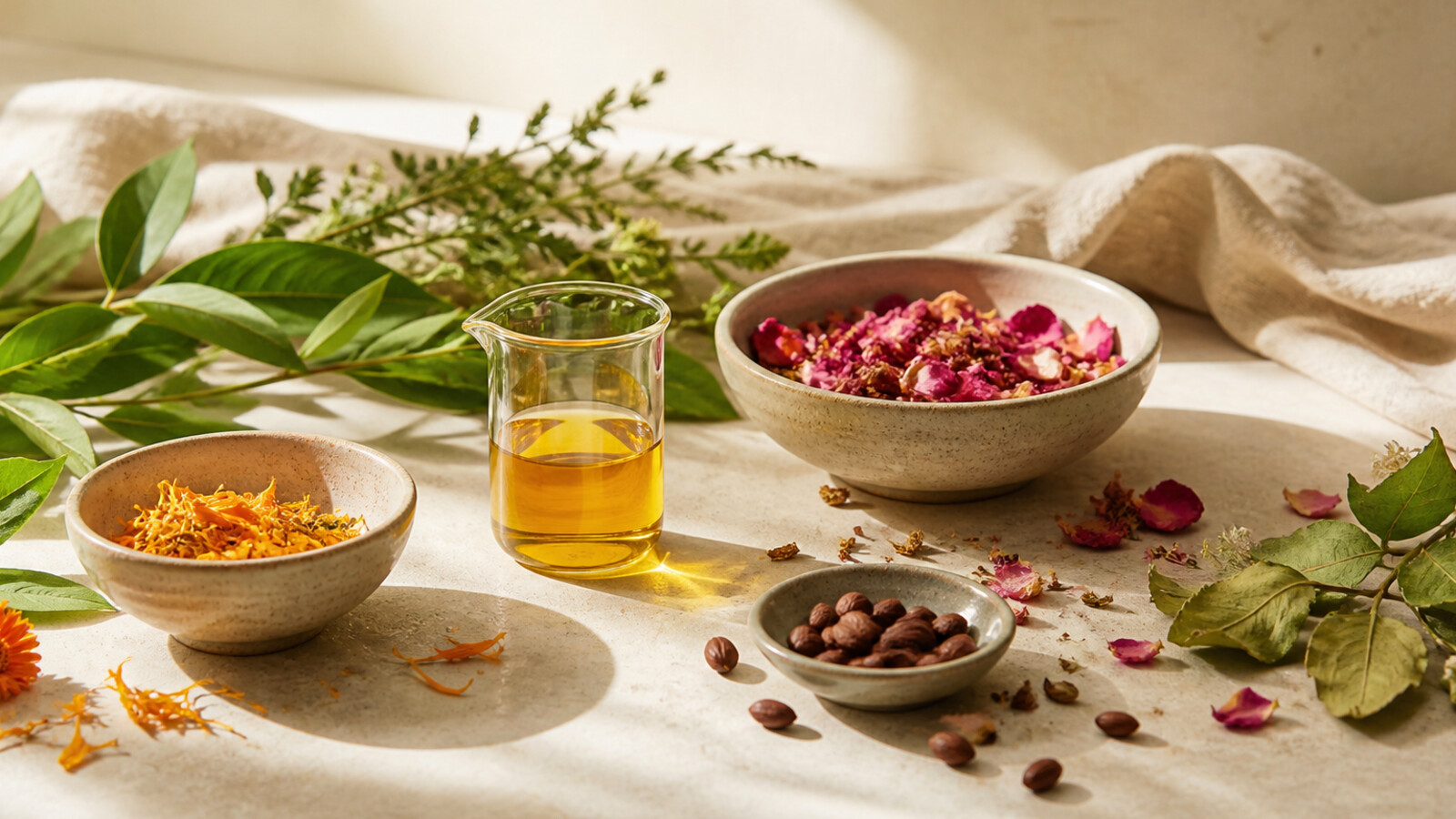
Plant-based skincare generally refers to products made primarily with ingredients that begin with plants. These may include seed oils, fruit oils, nut butters, floral extracts, herbs, roots, leaves, and plant-derived waxes. Familiar examples include jojoba oil, sunflower oil, shea butter, calendula, rosehip oil, and aloe.
The key word is primarily. There is no single universal percentage that every brand must meet before using the phrase “plant-based.” One formula may be entirely botanical, while another may feature a strong botanical base alongside non-plant ingredients that support texture, stability, color, or the way the product performs.
For shoppers, that makes the complete ingredient list more useful than a single marketing phrase. Our guide to reading a clean beauty ingredient list offers a practical way to evaluate what is actually inside a formula without turning your bathroom shelf into a chemistry exam.
Plant-based, natural, clean, and vegan are not identical
Beauty language loves a family reunion, but these terms are cousins—not twins. Knowing the differences helps set realistic expectations.
Plant-based
This usually describes a formula built mainly around ingredients sourced from plants. It speaks to where many of the ingredients begin, but it does not automatically define every ingredient in the product.
Natural
“Natural” is broad and can include ingredients from plants, minerals, or animals. A natural ingredient is not necessarily plant-derived, and brands may use different standards when applying the word.
Clean beauty
Clean beauty is a philosophy rather than one fixed formula rule. It often emphasizes understandable ingredient choices, thoughtful sourcing, transparency, and a simpler approach to routines. Definitions vary, so the brand’s ingredient information still matters.
Vegan
Vegan products contain no animal-derived ingredients. A product can be plant-forward without being vegan if it includes an ingredient such as beeswax. Likewise, a vegan formula is not automatically made only from plants; it may also contain minerals or lab-created ingredients.
Common plant-derived ingredients in simple skincare
Plant ingredients can play many different roles in a formula. Some create slip, some shape the texture, and others contribute a scent or sensory detail.
- Botanical oils: Oils such as jojoba, sunflower, sweet almond, rosehip, and grapeseed can give a formula glide and a soft, conditioned skin feel.
- Plant butters: Shea, cocoa, and mango butters add richness and help create the dense texture found in many balms and solid products.
- Herbs and flowers: Calendula, rose, chamomile, lavender, and other botanicals may appear as extracts, infusions, dried details, or scent inspiration.
- Essential oils: These concentrated aromatic ingredients can give soaps, oils, and balms their sensory personality. More is not automatically better; thoughtful formulation matters.
- Plant-derived waxes and starches: These can help shape consistency, improve glide, or give a product its finished form.
If you enjoy lightweight botanical textures, Plumera’s Face and Body Oils collection is an easy place to see how plant oils, flowers, and scent can come together in a streamlined routine.
Why formulation matters as much as the ingredient list
A beautiful ingredient can still feel awkward if the overall formula is not balanced. The amount of each oil, butter, wax, or aromatic ingredient influences whether a product feels light, rich, quick to absorb, firm, creamy, or slippery.
This is especially visible in handmade products. Small-batch makers make deliberate choices about ratios, resting time, scent, and texture. In cold-process soap, for example, oils are selected not only because they began as plants but also because of the hardness, lather, and feel they contribute to the finished bar.
That is why a short ingredient list is not automatically superior to a longer one. Simplicity is useful when it is purposeful. The better question is whether each ingredient has a clear job and whether the finished product fits the routine you want.
How to shop for plant-based skincare thoughtfully
1. Start with the full ingredient list
Look for ingredients you recognize, then research unfamiliar names in context. Botanical ingredients sometimes appear under standardized names, so an unfamiliar word is not automatically a red flag.
2. Decide what “plant-based” means to you
Are you looking for a mostly botanical formula, a vegan product, a short ingredient list, or a handmade alternative to a conventional staple? Your personal standard will help you shop more confidently.
3. Choose by routine, not by trend
A well-made bar soap, lip balm, or body oil that you use regularly is more valuable than a crowded shelf of fashionable extras. If simplifying your shower is the goal, browse Plumera’s handmade Bar Soaps by scent family and choose one that makes everyday use feel inviting.
4. Pay attention to texture and scent
Ingredient preferences matter, but so does the experience. A product has to fit your habits. Consider whether you prefer a brisk scent or a soft floral, a light oil or a richer balm, and a minimal routine or a few sensory steps.
5. Look for transparent brand information
Helpful product pages explain what a product is, how to use it, and what it contains without asking one buzzword to do all the work. Clear information is part of thoughtful formulation.
A simpler way to think about plant-based beauty
Plant-based skincare is best understood as a direction: formulas that place botanical ingredients at the center of the experience. It is not a guarantee that every product is identical, entirely botanical, vegan, or suited to every preference.
At Plumera Essentials, Beauty Through Simplicity means choosing ingredients and formats with intention, then making everyday care feel less complicated. Start with one product that fits a real part of your day, learn how it feels in your routine, and build from there. Your shelf does not need a jungle to be plant-forward—just a few well-chosen leaves.