How Are Handmade Soap Swirls Made? A Simple Design Guide
- Posted by
Allison Savino
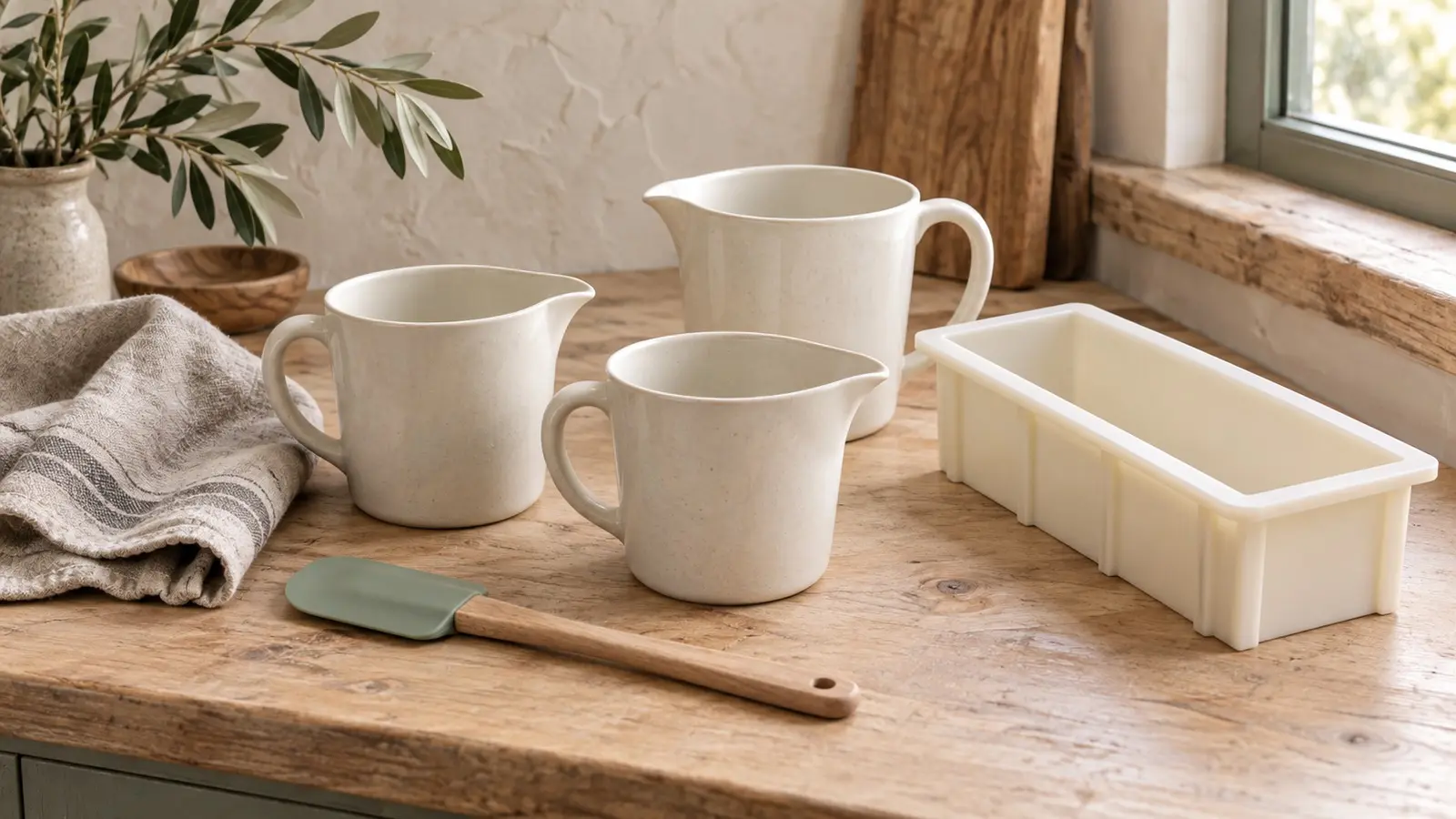
A ribbon of cream through a darker bar, a soft curl of color, a pattern that changes from one slice to the next: handmade soap swirls make an everyday essential feel a little more personal. They also raise a fair question. How does that design get inside the soap?
Most cold-process soap swirls are created while the soap mixture is still fluid. A maker divides the mixture into portions, colors selected portions, and brings them together through controlled pouring or gentle movement. The pattern becomes part of the bar rather than a picture printed on its surface. Here is a shopper-friendly look at the craft, without turning your bathroom reading into a soapmaking recipe.
What is a swirl in handmade soap?
A swirl is a flowing design made by combining differently colored portions of soap mixture without blending them into one uniform shade. Think of the difference between ribbons of cream in coffee and coffee that has been completely stirred. Both contain the same components, but the amount and direction of movement change what you see.
In soapmaking, that movement happens in a mixing container, during the pour into a mold, or through a tool drawn through the mixture. Some designs create fine wisps. Others form broad curves or bold patches. Not every handmade soap has a swirl, and a simple, single-color bar can be just as thoughtfully made.
Three common ways soapmakers create swirls
In-the-pot swirls
With an in-the-pot swirl, colored portions come together in a larger pouring container before entering the mold. Limited stirring keeps the colors partly separate, and pouring adds more movement. The result often looks soft and organic, with ribbons that travel through the loaf.
This name describes where the design begins, not one exact appearance. A maker can change the colors, proportions, and pouring motion while still using the same general technique.
Drop swirls
A drop swirl takes shape as different colors are poured into the mold. Colored streams move down into the soap beneath them, creating curves, drops, and trails. The height of the pour and the thickness of the mixture influence how those streams travel.
Once the loaf is sliced, the face of each bar reveals a cross-section of that movement. What looked like a simple line from above may become a much more interesting pattern inside.
Tool-drawn swirls
Other designs use a tool moved through the colored mixture in the mold. A planned path can draw the colors into loops, waves, or repeated curves. The movement might reach through much of the loaf or stay near the top.
That distinction matters when you shop: a decorative surface does not necessarily mean the same pattern runs through the entire bar. Product photographs from more than one angle can help you understand the design.
Why the mixture’s thickness matters
Soapmakers often discuss “trace,” a stage associated with the thickening soap mixture. For swirling, the practical question is how freely the mixture moves. A more fluid mixture can form delicate trails; a thicker one tends to hold bolder shapes. The exact result also depends on the formula and technique.
The maker is balancing time, texture, color, and movement. Too much mixing can blend distinct colors together rather than leave visible ribbons. Too little movement may leave larger separate areas. For more background on this part of the process, read our simple guide to trace in soapmaking.
Why two bars rarely have identical patterns
A swirled loaf is a three-dimensional design. Each slice reveals a different section, much like separate slices of marbled cake. One bar may have a broad sweep of color, while the next has a smaller curl. Even opposite faces of the same bar can look different.
Small differences in pouring angle, flow, and timing also affect the finished pattern. A product photo can show the intended style and palette without promising an exact duplicate of every line. When the pattern matters for a gift, look for notes about batch variation and ask the maker about the current batch before ordering.
Does a more elaborate swirl mean better soap?
A swirl tells you something about the design work, not everything about the formula. An intricate pattern is not a reliable shortcut for judging lather, scent strength, or how a bar will feel in your routine. Those qualities need their own description.
Choose the everyday details first: the listed ingredients, the intended use, the scent description, and the size. Then enjoy the design as an additional pleasure. A dramatic marble pattern is lovely, but it cannot choose your favorite fragrance for you.
How to choose a swirled soap as a fall gift
Early fall is a good time to think about small host gifts and upcoming gatherings. Color can help a bar feel considered without making the gift overly themed. Cream and earthy tones suit a quiet, natural palette; brighter contrasts can be a cheerful choice for someone who enjoys color.
- Start with the recipient. Choose a scent they enjoy rather than selecting by the photograph alone.
- Expect individual variation. Think of the pictured swirl as a design family, not a precise template.
- Keep the label with the gift. Ingredient information and the product name remain useful after the wrapping comes off.
- Keep the presentation simple. Plain paper or a reusable cloth lets the handmade detail do the talking.
There is no need to match every ribbon in a bar to the wrapping. A restrained presentation often makes the small variations feel more special.
Appreciate the pattern, choose for everyday use
Handmade soap swirls are a record of color in motion. Once you know a little about the pouring and mixing behind them, those small differences become easier to appreciate. The design is part of the enjoyment, while the formula and your own preferences remain the practical starting point.
Explore the Plumera Essentials handmade bar soap collection and compare the current photographs, ingredients, and scent descriptions. Whether you prefer subtle color or a more expressive bar, Beauty Through Simplicity leaves room for a little everyday artistry.