Why Is Sugar Used in Handmade Soap? A Simple Lather Guide
-
Posted by
Allison Savino
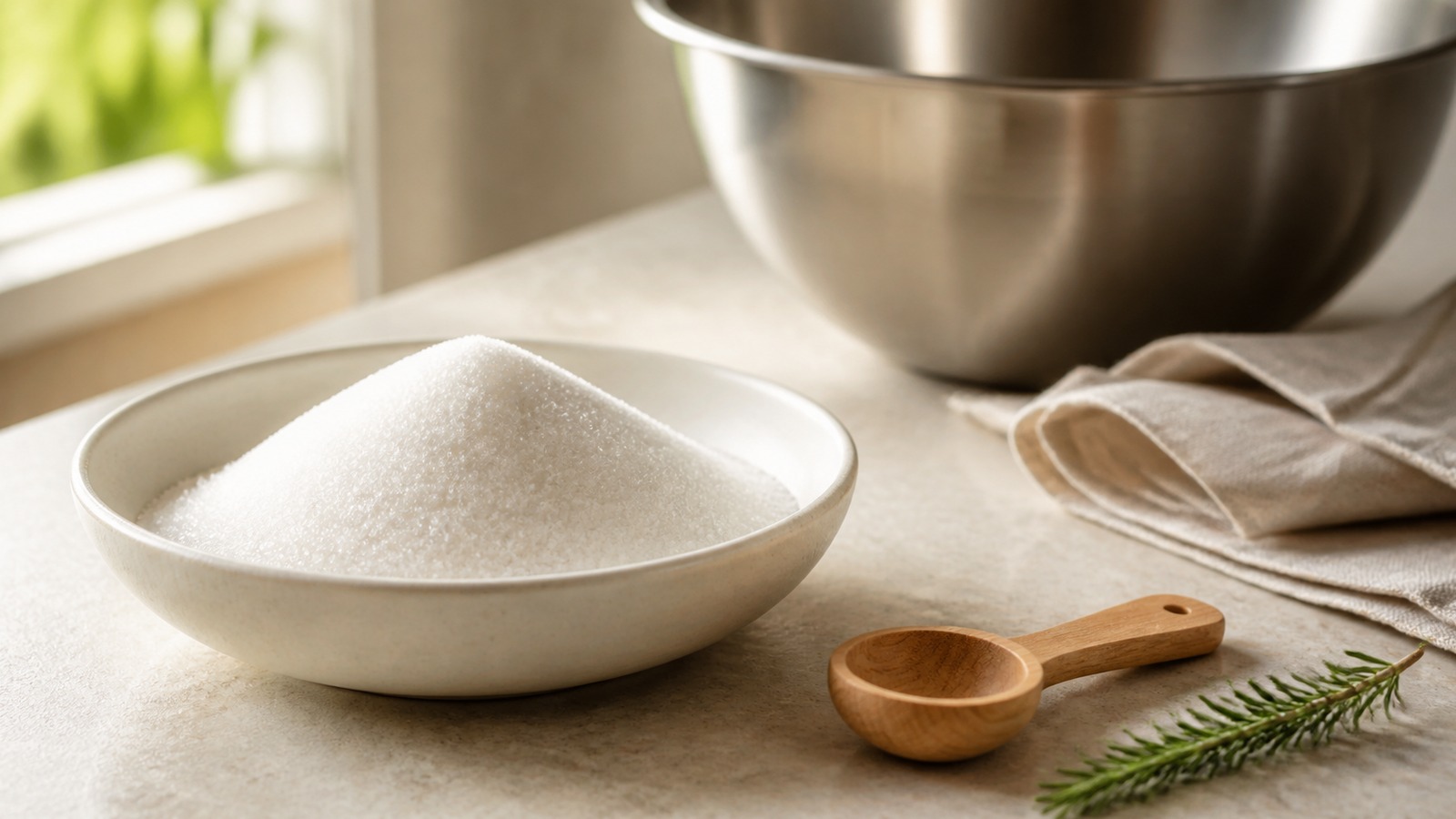
Sugar belongs in coffee, cookies, and perhaps the occasional emergency dessert. So why might it appear in a handmade soap recipe? In small, carefully measured amounts, sugar can help a soap formula produce a fuller, bubblier lather. It is a supporting ingredient, not a shortcut and certainly not the entire recipe.
Like many details in traditional soapmaking, the answer sits at the intersection of chemistry and craft. Here is what sugar can do in handmade soap, how makers may add it, and what its presence on an ingredient list can tell you.
Why do soapmakers add sugar to handmade soap?
The simplest answer is lather. Dissolved sugar can help a finished bar create more noticeable bubbles when it meets water and friction. This can be especially useful in a balanced recipe where the maker wants to encourage a lively lather without changing the bar’s entire oil blend.
Sugar does not clean on its own in the finished bar, and more sugar does not automatically mean better soap. The base oils, fatty-acid balance, water amount, making method, and resting stage still shape how the bar behaves. Sugar is one small lever among many.
How does sugar affect soap lather?
Handmade soap lather can range from dense and creamy to light and bubbly. Sugar tends to support the bubbly side of that spectrum. When the bar is used with water, it can help the lather build with a little more volume and energy.
That does not mean every sugar-containing bar will make enormous bubbles. A formula rich in oils that favor creamy lather may still feel dense and smooth. A different blend may look more airy. Our guide to why handmade soap uses a blend of oils explains why the full recipe matters more than any single addition.
How is sugar added during soapmaking?
Soapmakers use several methods, depending on the recipe and their preferred process. Some dissolve plain granulated sugar in a portion of the recipe water before combining the main ingredients. Others use a liquid that naturally contains sugars, such as certain milks, fruit-based liquids, or other recipe-specific additions.
The exact method matters because undissolved crystals can behave differently from a smooth sugar solution. Careful measuring also matters. Traditional soapmaking is not a sprinkle-and-hope situation; every part of the formula should be planned with the complete batch in mind.
Sugar can make a batch run warmer
Sugar can encourage heat during the soapmaking process. That extra warmth may influence how quickly the batter changes, how the loaf looks as it sets, and how the maker manages the mold. Experienced makers account for this rather than simply adding more for dramatic bubbles.
This is one reason a modest amount is usually the point. The goal is a balanced finished bar, not a chemistry spectacle on the worktable.
Does sugar make handmade soap sweet or sticky?
No—not when it is used appropriately in a well-made formula. The finished bar should not taste sweet, smell like sugar, or leave a syrupy layer behind. Sugar is incorporated into the soapmaking process in a measured amount, while the finished bar’s scent comes from its chosen aromatic ingredients.
A bar that includes sugar should still be stored like other handmade soap: on a draining dish with space to dry between uses. Good drainage helps any bar stay firm and pleasant at the sink or in the shower.
Will sugar appear on the ingredient list?
It may. Depending on the recipe and labeling approach, you might see sugar, sucrose, or a sugar-containing ingredient named in the list. Some labels name the original recipe ingredients, while others describe the ingredients after saponification.
If the wording feels more technical than expected, use our simple guide to reading a handmade soap ingredient list. Start with the whole list rather than judging the bar by one familiar or unfamiliar word.
Is sugar necessary in every handmade soap recipe?
Not at all. Soapmakers can build satisfying lather through a thoughtful combination of oils and fats without adding sugar. Coconut oil, castor oil, and other formulation choices can influence lather in different ways. Technique, water, and the finished bar’s age also play a role.
Some makers add sugar because it suits a particular formula. Others leave it out because the oil blend already gives them the result they want. Neither choice is automatically a mark of quality. The useful question is whether the complete recipe feels intentional and the finished bar performs well in everyday use.
What should shoppers look for?
- Read the complete list. Sugar is context, not a quality score.
- Notice the lather style. Decide whether you enjoy airy bubbles, creamy foam, or a balance of both.
- Consider the whole bar. Scent, size, texture, color, storage, and small-batch character all shape the experience.
- Use enough water. Wet the bar and your hands or washcloth, then build lather with gentle friction.
- Let the bar drain. A dry resting place helps handmade soap stay ready for the next wash.
A small ingredient with a clear job
Sugar is used in some handmade soap recipes because a little can support a fuller, bubblier lather. It works alongside the oils, water, process, and resting time rather than replacing any of them. That is the beauty of a thoughtful formula: each ingredient has a purpose, and none needs to shout.
Curious about how different bars look, smell, and lather? Explore Plumera Essentials’ collection of handcrafted bar soaps and choose the scent and small-batch style that fits your routine.
Beauty Through Simplicity means understanding the little details without making daily care complicated.