Why Do Soapmakers Use Distilled Water? A Simple Ingredient Guide
-
Posted by
Allison Savino
Botanical oils, beautiful swirls, and inviting scents tend to get the attention when we talk about handmade soap. Water rarely gets a close-up. Yet it has an important role long before a finished bar reaches your bathroom.
Why do soapmakers use distilled water? In short, it provides a more consistent starting point by leaving most dissolved minerals behind. That helps a maker focus on the planned formula rather than the changing details of the local water supply. Here is a straightforward look at this quiet ingredient, without turning your next soap purchase into a chemistry exam.
What is distilled water?
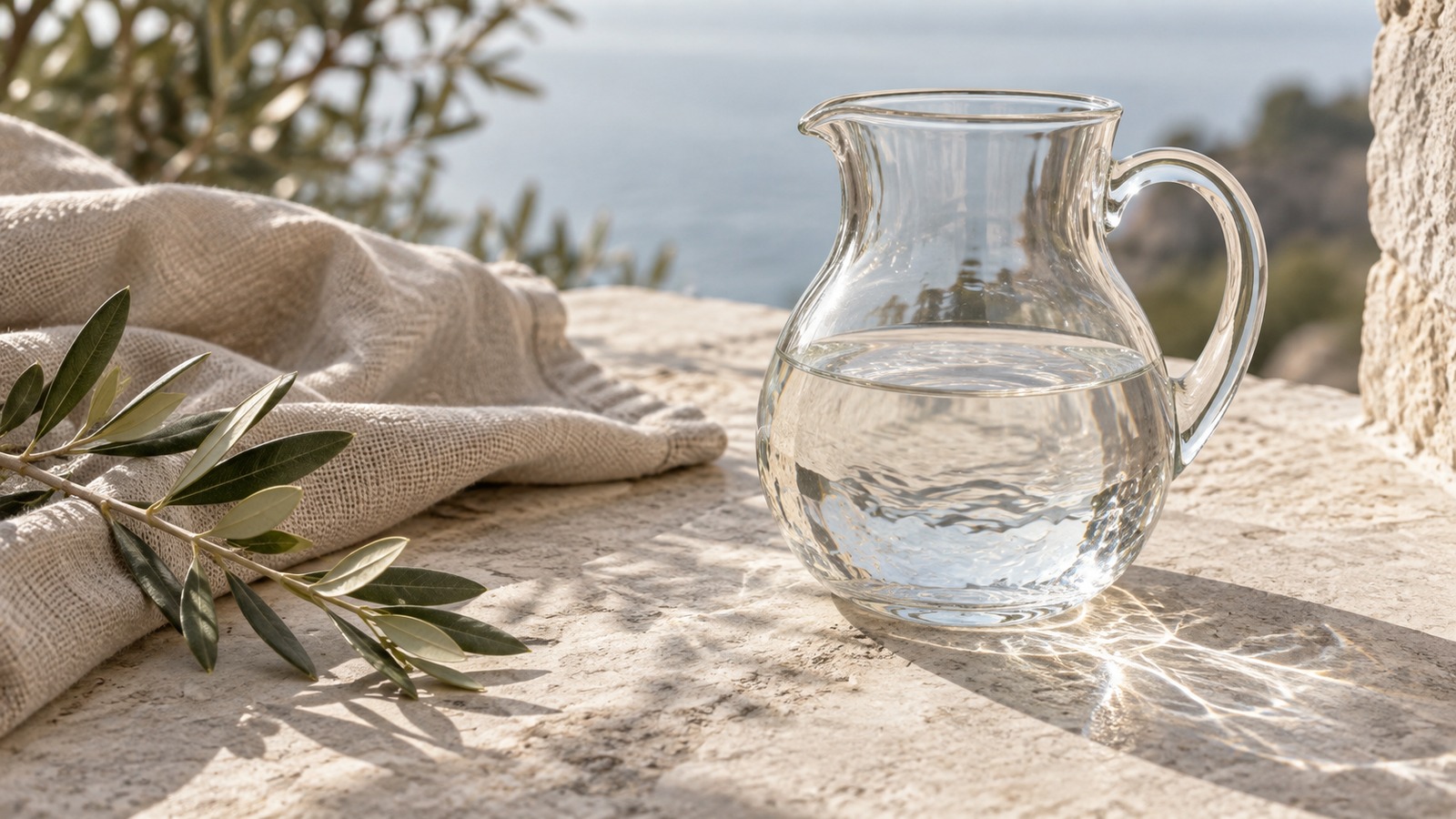
Distilled water is made by turning water into vapor and collecting that vapor as it cools back into liquid. Most dissolved minerals remain behind during the process. The result is water with a much lower mineral content than many ordinary tap or spring waters.
That distinction is useful in formulation. Distilled water is not a botanical extract, a fragrance, or a special skin-care promise. Its appeal to a soapmaker is practical: it introduces fewer mineral variables into a carefully measured batch.
Why is water part of handmade soap?
In traditional cold-process soapmaking, water serves as the liquid in which sodium hydroxide is dissolved before the solution is combined with oils. The ingredients then undergo the process that forms soap. Water also affects how fluid the mixture is during making and how quickly a new bar becomes firm enough to handle.
As bars rest, some water gradually evaporates. This is one reason a freshly made bar and a finished bar do not feel identical. Water belongs to the process, even though the finished product is solid rather than a pourable liquid.
This is a shopper’s explanation of an ingredient, not a soapmaking recipe. A finished formula depends on precise measurements and a complete, established making procedure, not simply combining water with whatever oils happen to be nearby.
Why soapmakers often choose distilled water
A more consistent starting point
Tap water varies by location and source. Its mineral content may be very different from one town to the next. A maker who chooses distilled water removes much of that variation from the starting ingredients.
Consistency matters when a formula is made repeatedly. If a maker adjusts an oil blend or tests a new design, it helps to keep other ingredients as predictable as possible. Water is one part of that larger habit of thoughtful batch planning.
Fewer mineral interactions to account for
Minerals such as calcium and magnesium can interact with soap. That is familiar to anyone who notices different lather or residue when traveling between places with different water supplies. Choosing low-mineral water during production gives the maker fewer of those interactions to account for at the start.
It does not mean the finished soap will behave exactly the same in every home. The water at your own sink or shower still plays a part when you use the bar.
Clearer comparisons between batches
Handmade does not have to mean improvised. A repeated water source, measured ingredients, and clear notes all help a maker compare one batch with another. If you enjoy understanding these behind-the-scenes choices, our guide to why soapmakers measure ingredients by weight explores another small detail with a practical purpose.
Are filtered, spring, and distilled water the same?
Not necessarily. These names describe different things, and they should not be used interchangeably when discussing a formula.
- Filtered water: The result depends on the filter. An everyday household filter may change taste or remove certain substances without removing most dissolved minerals.
- Spring water: It can contain naturally occurring minerals. Those minerals are part of what distinguishes one source from another.
- Distilled water: The evaporation-and-condensation process leaves most dissolved minerals behind.
The point is not to rank the water in your kitchen. It is to understand why a maker might specify one type for a particular process. Water that is pleasant to drink is not automatically interchangeable with the water chosen for a carefully developed soap formula.
Does distilled water make a soap bar better?
It is one formulation choice, not a complete verdict on a bar. The oil blend, proportions, making process, resting time, scent, and storage all contribute to the finished experience. A single ingredient cannot tell that whole story.
Likewise, distilled water is not a reason to expect a particular cosmetic benefit. It does not promise extra softness, a certain scent strength, or a luxurious lather by itself. Those experiences come from the finished formula and how you use it.
This article describes a common soapmaking choice rather than the water source used in every Plumera recipe. For a particular bar, rely on its current ingredient information or ask about the details that matter to you.
What should shoppers look for instead?
Start with the complete product description. Look for an ingredient list, a clear scent description, a size that suits your routine, and straightforward care directions. These are more useful shopping clues than making one familiar or unfamiliar ingredient the deciding factor.
Choose a bar you will enjoy using, then give it a draining spot between washes. You do not need a new water setup or a complicated bathroom routine to appreciate thoughtful handmade soap.
A small ingredient with a practical job
Distilled water rarely becomes the star of a soap display, but it helps explain the care behind a formula. Sometimes simplicity means choosing fewer variables, not fewer thoughtful decisions.
Explore the Plumera Essentials handmade bar soap collection to find a scent and style that fit your everyday routine. Beauty Through Simplicity starts with understanding what you use, one useful detail at a time.