Why Is Soap Lather White Even When the Bar Is Colorful?
- Posted by
Allison Savino
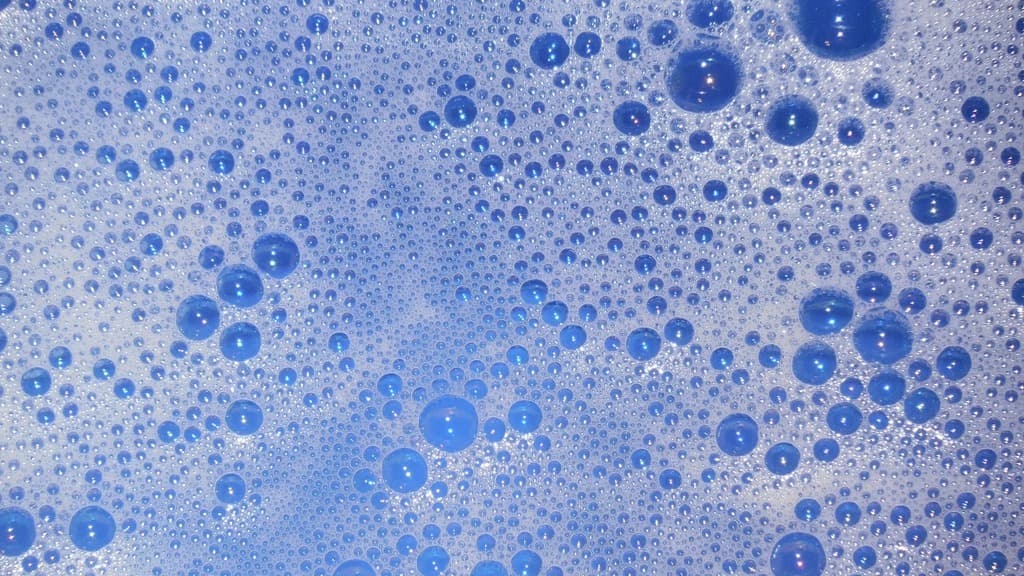
A jewel-toned soap bar meets water, and the lather turns almost white. Where did the color go? If you have wondered why a pink, green, or charcoal-colored bar makes such pale bubbles, the answer is mostly about light—not a disappearing ingredient.
Understanding why soap lather looks white makes it easier to appreciate handmade bars without expecting their foam to match their swirls. Here is a simple guide to what you are seeing, why some lather does have a tint, and which details are more useful when choosing your next everyday bar.
Why does soap lather usually look white?
Lather is a collection of air bubbles surrounded by thin films of liquid. When light reaches that collection, it encounters many tiny surfaces instead of one solid block. Those surfaces redirect light in different directions. With much of the visible spectrum returning together, our eyes read the result as pale or white.
Meanwhile, the small amount of soap released from the bar is mixed with water and spread through those very thin films. Its color is often much less noticeable than it was in the solid bar. The combination of diluted color and scattered light explains why a richly colored soap can produce surprisingly pale foam.
The Naked Scientists describe this light-scattering effect in their explanation of why soap foam looks white. The useful everyday takeaway is that the appearance of the bar and the appearance of its lather are two different things.
A solid bar and a bubble show color differently
The bar gives color more material to travel through
Look at a whole bar and you are seeing a substantial piece of soap. Color ingredients are distributed throughout its body, sometimes in distinct layers or swirls. Its surface texture and opacity also affect how rich or muted the shade appears.
Now imagine spreading a tiny amount of that material into a very thin film. There is much less colored material in the path of the light. A color that looked strong in the bar can become barely visible in the bubble. This does not mean the original color was imaginary; the viewing conditions have changed.
Many bubbles create a different effect from one bubble
A single bubble can look nearly transparent, sometimes with a fleeting rainbow sheen. A pile of bubbles looks much more opaque because the light encounters many overlapping surfaces. That is why loose bubbles at the edge of a lather can look clearer than the denser foam in the middle.
You may notice the same contrast as you rinse: thick lather appears creamy white, then becomes more transparent as the bubbles separate and the water carries it away. The lighting and the color of the sink underneath can influence what you notice, too.
Can colored soap ever make colored lather?
Yes. White or pale lather is common, but it is not a rule that every formula must follow. Some bars produce a gray, tan, pinkish, or otherwise tinted lather, depending on their ingredients and how much soap is present relative to water.
Color materials also behave differently. Some dissolve, while others remain as finely dispersed particles. The specific material, its concentration, and the rest of the formula all matter. You cannot reliably predict the exact shade of the bubbles from the outside color of a bar alone.
For a closer look at how different color ingredients work, our guide to mica and clay in handmade soap separates visual design from ingredient assumptions. Neither a dramatic swirl nor pale foam tells the entire story of a formula.
What white lather does not tell you
It is tempting to use one visible detail as a shortcut for judging a product. Foam color is not a useful shortcut for most shopping decisions.
- It does not identify the scent. A deeply colored bar can have a subtle aroma, and a pale bar can have a noticeable one. Read the scent description instead.
- It does not prove a bar is color-free. Color ingredients can be present even when their shade is difficult to see in diluted lather.
- It does not establish ingredient origin. White bubbles do not distinguish plant-derived ingredients from other materials. The ingredient list is the better reference.
- It does not rank quality. A white, cream, or lightly tinted lather is an appearance characteristic, not a score for how thoughtfully a bar was made.
Notice texture without chasing a particular color
If you enjoy comparing handmade soaps, pay attention to the everyday experience rather than expecting a certain shade of foam. Does the lather feel airy or dense? Does the bar fit comfortably in your hand? Do you enjoy its scent while washing? These observations are more useful for remembering your preferences.
Keep comparisons simple. Using one bar with your hands and another with a washcloth introduces a different way of building lather. Different water sources can also change the experience. You do not need a formal test; just avoid giving all the credit to the bar when other parts of the routine have changed.
Follow each product’s directions, rinse thoroughly, and let the bar drain between uses. There is no need to keep adding soap simply to make the bubbles resemble the color of the bar. Your sink does not need to become a paint palette.
Choosing a handmade bar beyond the swirl
Visual design can absolutely be part of the pleasure of handmade soap. A soft botanical shade or a bold pattern can make a useful everyday item feel special. Pair that first impression with practical details: the current ingredient list, scent description, intended use, size, and your own preferences.
Explore Plumera’s handmade bar soap collection when you are ready for your next bar. Choose the one that fits your routine, enjoy its individual character, and let the bubbles be bubbles. A colorful bar and pale lather are perfectly capable of belonging to the same simple moment.