Why Handmade Soap Needs Time to Rest: The Cold-Process Waiting Period
-
Posted by
Allison Savino
A freshly cut bar of handmade soap may look ready for the shower, but its work is not finished. Cold-process soap needs a quiet waiting period after it leaves the mold—a stretch of time when the bars rest in open air before they are wrapped, stocked, and sent home.
That pause is not idle time. It is part of the craft. For small-batch makers, patience helps turn a soft new bar into a firm, practical bar that feels ready for everyday use. Here is what happens during the cold-process waiting period, why makers do not rush it, and what it means for the soap in your bathroom.
What happens after handmade soap is cut?
Cold-process soap begins as carefully measured oils and an alkali solution that are blended, poured into a mold, and allowed to set. If you would like the full beginning-to-end overview, our guide to how traditional cold-process soap is made explains the method in simple terms.
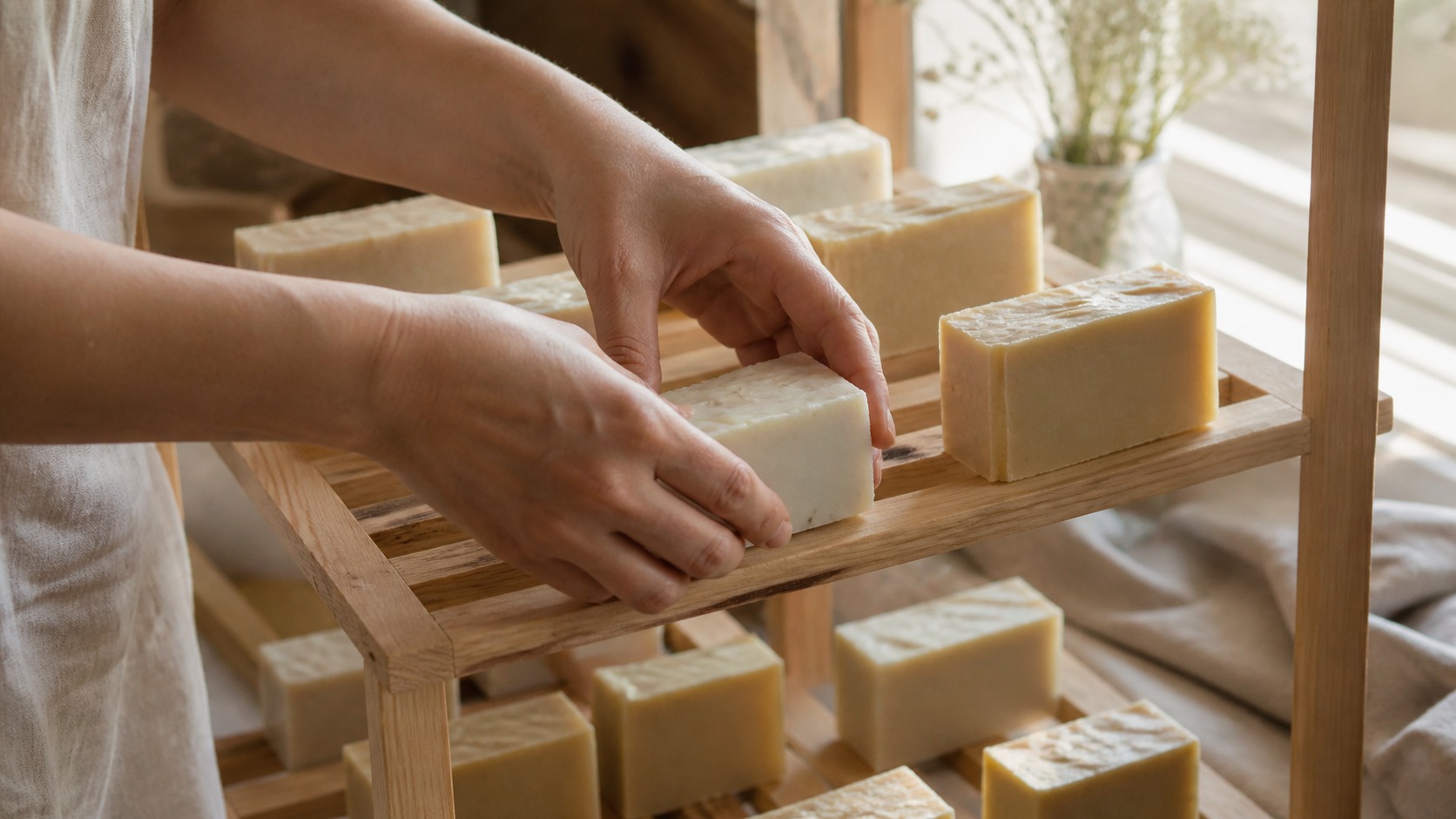
Once the loaf is firm enough, it is removed from the mold and cut into individual bars. The bars are then placed on open racks or trays with space around them. Good airflow matters because each surface needs room to dry evenly. Makers may turn or reposition bars along the way so the edges and faces receive similar exposure to the air.
At this stage, the bars are recognizable as soap, but they still contain more water than they will later. They may feel softer, weigh slightly more, and show fresh cut marks. The waiting period gives that extra water time to leave gradually.
Why handmade soap needs time to rest
1. The bar becomes firmer
As water slowly evaporates, the bar becomes harder and easier to handle. A firmer bar is less likely to soften quickly when it meets the daily rhythm of water, lather, and drying. That matters in real bathrooms, where a soap bar may be used more than once a day.
2. The bar can last longer in everyday use
A well-rested bar generally holds its shape better than a very fresh bar. That does not make it indestructible—handmade soap still appreciates a dry place between showers—but the waiting period gives the bar a more practical starting point.
Home care makes a difference, too. A draining accessory such as a handmade slotted wood soap dish helps water move away from the bar instead of collecting underneath it.
3. The maker gets a quality-check window
The rack is also an inspection station. During the waiting period, a maker can watch how the bars firm up, check that they are drying evenly, and look for unexpected changes in appearance, scent, or texture. Small-batch soap is made by hand, so thoughtful observation remains an important part of the process.
This is one reason handcrafted bars may not look identical. Tiny differences in swirls, tops, color, and cut lines are part of working in small batches. The goal is not factory-perfect sameness; it is a carefully made bar that meets the maker’s standards before it reaches the shelf.
How long does cold-process soap need to rest?
There is no single waiting period for every recipe. Many cold-process bars rest for several weeks, but the exact timing depends on the formula, the amount of water used, the bar size, and the conditions in the workspace. Temperature, humidity, and airflow can all influence how quickly moisture leaves the bar.
Responsible makers follow the needs of the batch rather than the impatience of the calendar. A humid week may slow things down. A larger bar may need more time than a smaller one. The recipe and the maker’s quality checks—not a shortcut—determine when the soap is ready.
What does a soap-resting rack look like?
Think practical, clean, and airy. Bars are arranged with breathing room on shelves, trays, or racks in a protected workspace. They should not be packed tightly together or sealed in packaging while they are still releasing moisture. Open spacing allows air to reach more of each bar.
The setup may be simple, but organization matters. Makers keep track of batches, dates, recipes, and quantities so each group of bars can be followed from pour day to shelf day. Behind every neat stack of finished soap is a decidedly less glamorous amount of labeling, counting, turning, and waiting. Handmade beauty has its little spreadsheets, too.
Do you need to keep waiting once the bar arrives?
No special at-home waiting period is usually necessary when you buy finished handmade soap from an established maker. The bar should already have completed the maker’s process before it is offered for sale. At home, the more useful habit is simple bar care:
- Let the bar drain after each use.
- Keep it out of standing water.
- Place it where air can circulate around it.
- If several bars are in rotation, store the extras in a cool, dry place.
These small steps help preserve the firm texture the maker waited weeks to achieve. No elaborate ritual required—just water, lather, rinse, and a sensible place to dry.
Why the waiting period reflects the value of handmade soap
Handmade soap asks for something modern life does not always enjoy giving: time. The loaf must set before it can be cut. The bars must rest before they can be wrapped. Each batch moves at the pace of the process, not the pace of next-day delivery.
That time is part of what you are choosing when you buy a small-batch bar. You are supporting measured ingredients, hands-on work, careful observation, and the patience to finish the job properly. The result is a bar made for a simple daily routine—nothing fussy, just thoughtful craftsmanship you can use.
If you are ready to bring that slow-made approach to your shower, explore the fresh, woodsy character of Cedar Bergamot Natural Soap and find a handmade bar that fits your routine.
Beauty Through Simplicity — Better for you & better for the environment.