Why Does Handmade Soap Crack? A Simple Bar Texture Guide
-
Posted by
Allison Savino
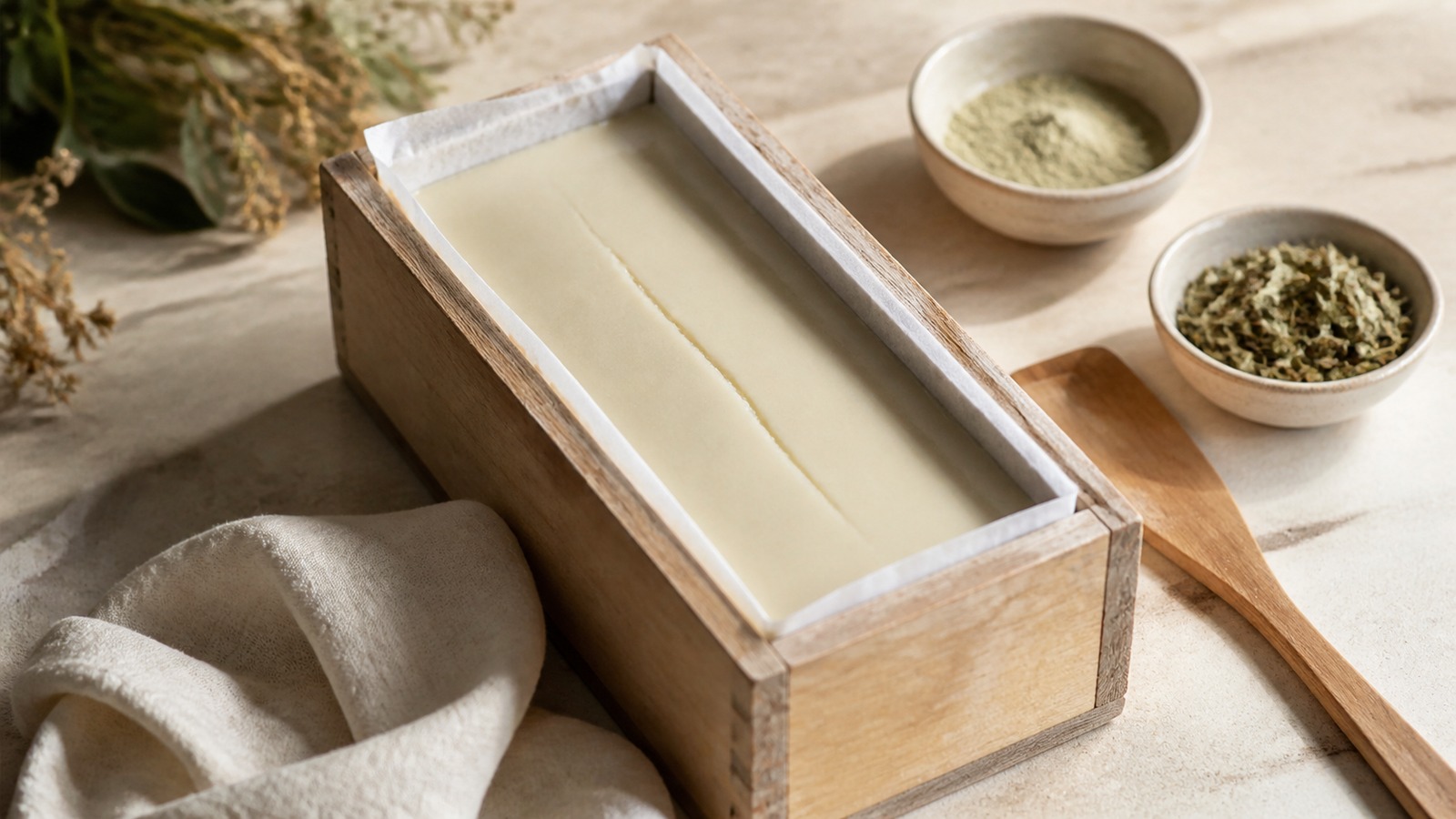
A thin line across a handmade soap bar can be surprising. The surface looked smooth when you unwrapped it, and now there is a small crack near an edge or through the center. Is the bar ruined? Usually, no. A crack is often a texture or storage clue rather than a reason for immediate alarm.
Handmade soap changes as it is made, rests, gets wet, and dries again. Small fissures can appear at different stages for different reasons. Understanding when the crack formed—and how the bar has been stored—makes the mystery much easier to solve.
Why Handmade Soap Can Crack During Making
Cold-process soap begins as a fluid mixture of carefully measured oils and an alkaline solution. The mixture is poured into a mold, where saponification continues and the loaf naturally warms. If you would like a simple overview of that transformation, Plumera’s guide to how cold-process soap is made walks through the process from mixing to finished bar.
The loaf became warmer than expected
Fresh soap can generate heat inside the mold. If the center warms and expands more quickly than the surface, a line may open across the top of the loaf. Makers watch temperature, insulation, fragrance behavior, room conditions, and the size of the batch because all of those details can influence how heat moves.
A shallow top crack during making is often a process note for the soapmaker. It can help guide the next batch—perhaps with less insulation or a cooler environment—without automatically making every bar from that loaf unusable.
The batter thickened quickly
Some scent materials, temperatures, or mixing choices can make soap batter thicken faster than planned. A heavy batter may settle into the mold with ridges or small gaps instead of flowing into one perfectly smooth surface. Once the loaf firms and is cut, those marks can look like cracks even when they began as part of the pour.
The bar dried unevenly
After cutting, handmade soap rests in an airy space while water gradually leaves the bar. Good spacing supports even drying, but bar thickness, airflow, humidity, and recipe design can all influence the finished surface. Plumera’s article on why handmade soap needs time to rest explains why this quiet stage matters to firmness and everyday use.
Why a Soap Bar May Crack at Home
A finished bar continues to meet water, air, warmth, and changing bathroom conditions. If a crack appears after several uses, the cause is often part of that wet-and-dry rhythm rather than the original pour.
Repeated soaking and drying
Soap naturally absorbs some water at the surface while you use it. When the bar later dries, that surface firms again. Repeated cycles are normal, but a bar that becomes heavily saturated and then dries quickly may develop a small fissure. Think of it as the bar responding to changing moisture rather than failing at its job.
Standing water
A flat dish, wet shower ledge, or closed container can keep one side of the bar soft while the other side dries. That uneven texture creates stress across the bar. The result may be a center line, a split edge, or a softer layer that begins to separate.
Sudden changes in temperature or humidity
A steamy bathroom followed by strong air-conditioning can change how quickly the surface dries. Travel can do the same thing: a damp bar goes into a container, then comes out into a much drier room. Handmade soap does not need climate-controlled luxury, but it does appreciate ordinary consistency and airflow.
The bar is very thin
As a soap bar gets smaller, the remaining piece has less structure. A thin sliver may bend or split when gripped firmly, especially after it has softened in water. That is not unusual at the end of a bar’s life. A soap saver bag can keep small pieces together so they remain easier to use.
Can You Still Use a Cracked Soap Bar?
A simple, clean-looking crack in a bar that otherwise looks and smells as expected is usually a cosmetic issue. Rinse the bar, let it dry fully on a draining surface, and use it with normal common sense. If the crack creates two pieces, both pieces can still fit into an everyday soap routine.
Pause and contact the maker if a new bar arrives with a deep split, crumbles immediately, has unexpected wet pockets, or looks or smells notably different from the description. The person who made the batch is best placed to identify whether you are seeing ordinary handmade variation or something that deserves a closer look.
How to Help a Handmade Soap Bar Stay Firm
You do not need a complicated storage system. A few small habits make the biggest difference:
- Place the bar on a slotted, raised, or well-draining dish.
- Keep it away from constant direct shower spray.
- Give air room to move around more than one side of the bar.
- Let a damp travel bar dry before closing it in a container.
- Avoid stacking wet bars directly against one another.
- Move thin end pieces into a breathable soap saver bag.
If several people share one bar, rotating between two can give each one more time to dry. The setup can still look simple: one active bar, one dry bar, and no bathroom shelf drama required.
A Small Crack Is Often Just Part of Handmade Soap
Handmade soap is measured carefully, but it is not designed to look like a perfectly stamped factory block forever. Temperature during making, the resting environment, bathroom humidity, and daily storage can all leave small marks on a bar. A crack tells you to check drainage and drying—not to panic.
Ready to choose a bar for your own sink or shower? Browse Plumera’s small-batch handmade soap collection, then give your favorite a dry, well-drained place between uses. A thoughtful bar and a simple storage habit are usually all the routine needs.