Soap Saver Bag vs. Soap Dish: Which Is Better for Handmade Soap?
-
Posted by
Allison Savino
A handmade soap bar deserves a better resting place than the edge of the sink. But when you are choosing between a soap saver bag and a soap dish, the right answer depends on how you use your bar, where you keep it, and whether you are working with a full bar or the final slippery slivers.
Both accessories can make a simple bar-soap routine feel tidier and more intentional. They simply do different jobs. This guide compares a soap saver bag vs. soap dish so you can choose the better fit for your bathroom, kitchen sink, guest space, or travel routine.
Soap saver bag vs. soap dish at a glance
A soap dish gives a full bar an open place to rest between uses. A well-designed dish lifts the bar away from pooled water and allows air to move around it. It is the straightforward choice when you want the soap visible, easy to reach, and neatly contained beside the sink or shower.
A soap saver bag is a woven pouch that can hold a full bar or gather small pieces together. You wet the bag, work up lather, use gentle pressure, rinse it, and hang it in a ventilated place to dry. It is especially useful when a bar becomes too small or slippery to hold comfortably.
The simplest comparison is this: a dish is primarily a resting place, while a bag is primarily a holding and lathering tool. Many households will find that the two accessories complement each other rather than compete.
When a soap dish is the better choice
You use a full bar at the sink
A draining dish is easy to understand and easy to use. Set the bar across the raised surface after washing, and it stays ready for the next person. That makes a dish a natural fit for a bathroom vanity, kitchen sink, powder room, or guest bath.
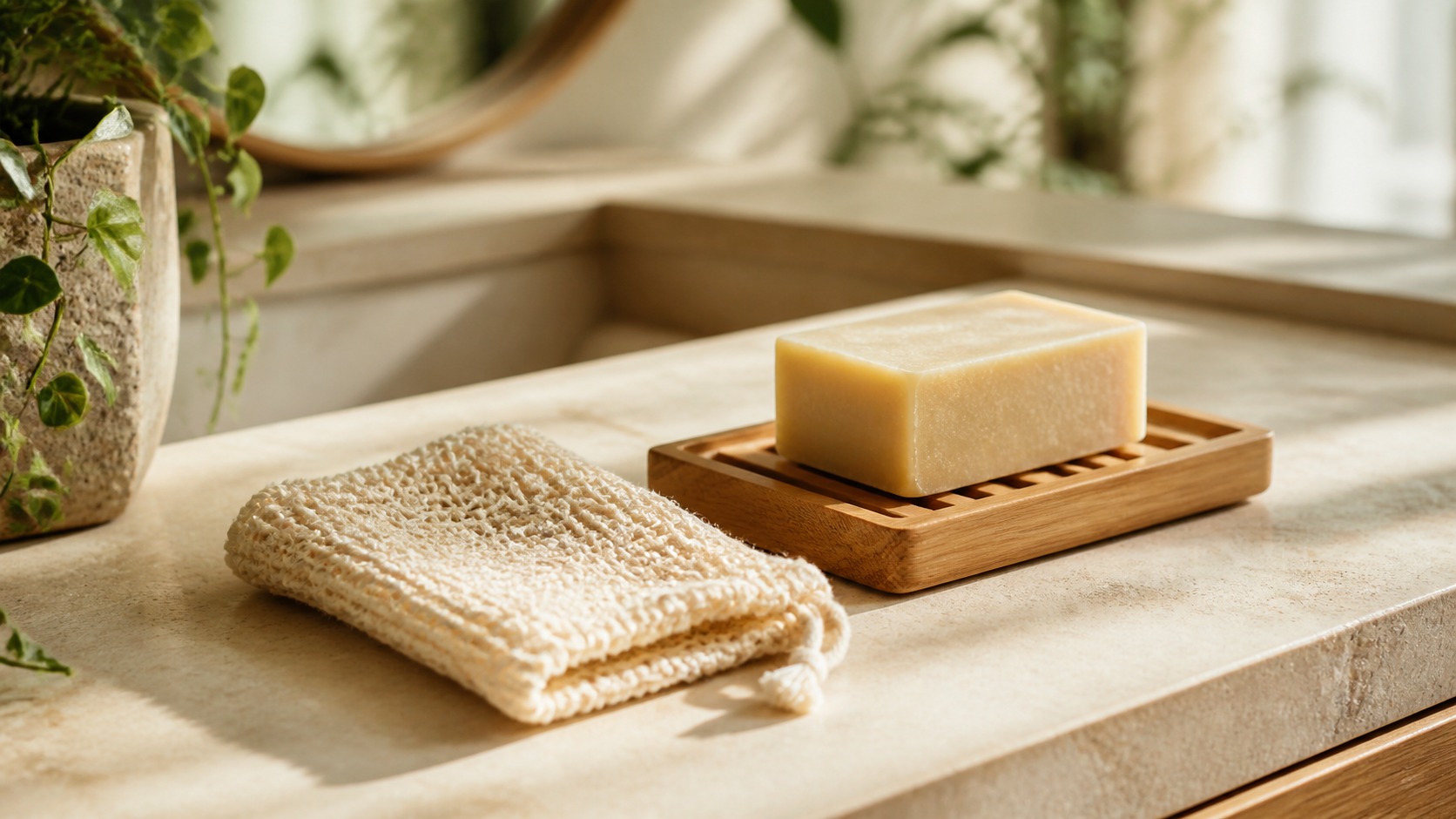
Plumera’s handcrafted red alder soap dish uses raised turret-style ridges to lift a bar above pooled water. Its compact footprint keeps it practical on a crowded counter, while the warm wood brings a quiet, natural detail to the room.
You prefer a quick visual check
With an open dish, you can see the bar, notice when the drainage channels need rinsing, and check that the area is not sitting in water. There is no drawstring to open and no pouch to turn out. For anyone who values a low-fuss routine, that visibility is a genuine advantage.
You are styling a guest bathroom
A beautiful bar on a simple wooden dish can look polished without feeling overdone. The pairing also tells guests exactly where the soap belongs. Choose a stable location away from a direct shower stream, keep the channels clear, and allow the wood to dry fully between uses.
When a soap saver bag is the better choice
You want to corral small soap pieces
The last pieces of a bar can be perfectly useful and spectacularly uncooperative. A woven pouch keeps those little pieces together, so they can continue working as part of your routine instead of skittering around the sink.
The Plumera sisal soap saver bag is handmade from woven sisal fiber and can hold either a full bar or soap scraps. Wet the pouch, build lather, use light pressure, rinse thoroughly, and hang it to dry in a well-ventilated place.
You like a little texture
Sisal feels noticeably textured rather than soft or plush. That can make a washing routine feel more tactile, but pressure matters. Start lightly and let comfort guide you; enthusiastic scrubbing is not a personality requirement.
You have a reliable place to hang it
A bag works best when it has room to dry after use. A hook or shower caddy in a ventilated spot is more useful than leaving the damp pouch flat on a ledge. Rinse out lingering lather, give the drawstring a gentle squeeze, and hang the bag where air can circulate.
Can you use a soap saver bag and soap dish together?
Yes. In fact, that may be the most flexible setup. Keep a full, frequently used bar on the dish. When the bar becomes too small to handle easily, move the pieces into the bag. The dish manages the everyday full-bar routine, while the bag gives the final pieces a practical next chapter.
You can also separate roles by location. A dish may make sense beside the sink, while a bag hangs in the shower. In a shared bathroom, that distinction keeps the counter orderly and makes each accessory’s purpose clear.
Whichever setup you choose, airflow remains important. Our guide to keeping handmade soap dry in humid weather offers additional ideas for placement, rotation, and bathroom ventilation.
How to choose the right option for your routine
Choose a soap dish if:
- You mainly use full bars.
- You want a simple countertop setup.
- You prefer the soap to stay visible and easy to reach.
- You have a stable spot away from standing water.
- You are creating a polished guest-bathroom presentation.
Choose a soap saver bag if:
- You regularly collect small soap pieces.
- You enjoy a textured washing tool.
- You have a ventilated place to hang the pouch.
- You want one accessory that can hold a full bar or scraps.
- You prefer to keep slippery pieces contained.
Choose both if:
- You want a full-bar resting place and a plan for the final slivers.
- You use bar soap at both the sink and the shower.
- Different people in the household prefer different routines.
Simple care tips for either accessory
Small habits make both options easier to live with. Rinse away soap residue as needed. Keep drainage spaces open. Avoid leaving wood in standing water. Let a sisal pouch dry fully before its next use. If your bathroom stays steamy, move the accessory to a more open spot after the shower.
It also helps to keep the setup uncluttered. A dish crowded with several damp bars cannot do its job gracefully, and a bag packed with too many scraps may be difficult to rinse. One active bar and a sensible amount of breathing room are usually enough.
The best soap accessory is the one you will use
There is no universal winner in the soap saver bag vs. soap dish debate. A dish suits full bars, open storage, and tidy sink styling. A bag shines when you want to gather small pieces, build lather, and hang the soap between uses. Using both creates an easy system from the first wash to the final sliver.
Choose the accessory that matches your space and habits, then keep the routine simple: rinse, drain, dry, repeat. That is Beauty Through Simplicity at work—less fuss around the sink and more enjoyment from an everyday handmade bar.