How to Choose a Soap Dish: Wood, Ceramic, or Silicone?
- Posted by
Allison Savino
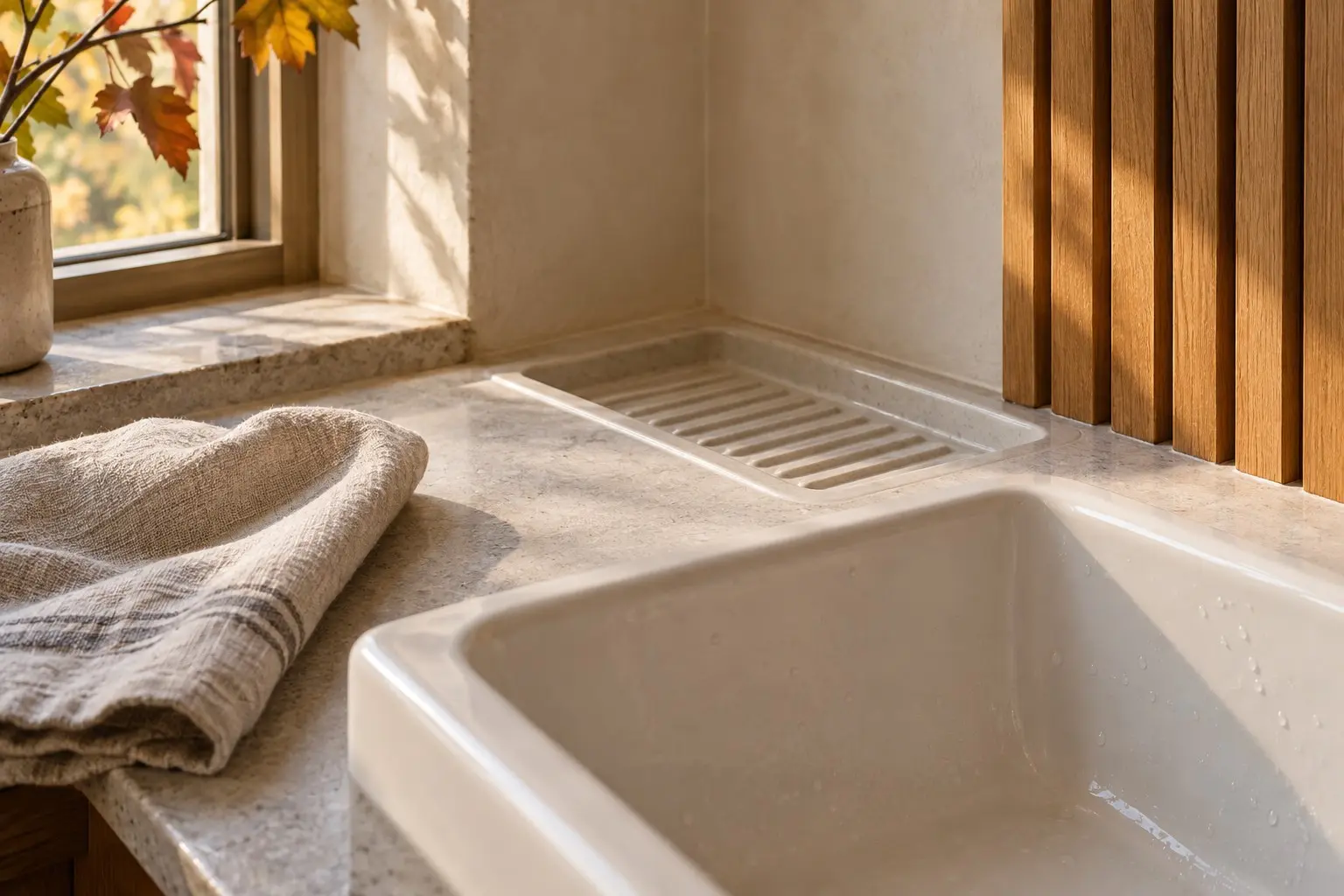
A soap dish is a small purchase with an everyday job: give your bar somewhere to rest between washes. Yet two dishes that look equally lovely on a bathroom counter can behave quite differently once water enters the picture. One drains neatly; the other becomes a tiny pond.
If you are refreshing your bathroom for fall, start with function rather than adding more accessories. Here is how to choose a soap dish by comparing wood, ceramic, and silicone, checking the drainage, and finding a shape that suits the bar you actually use. No full bathroom makeover required.
What makes a good soap dish?
The best soap dish keeps a wet bar elevated, gives water a clear place to go, and is easy to clean. Material matters, but design often matters more. A beautiful ceramic dish with a flat base may hold water, while a simple raised insert can give the same bar a much better resting place.
Before choosing a finish, check three details: the area that supports the soap, the route water takes away from it, and the surface underneath. A dish that drains straight onto an unprotected wooden counter simply moves the problem. Match the drainage style to its location, not just its appearance.
Wood soap dishes: warm texture with a little upkeep
A wooden dish brings natural warmth to a sink or shower shelf. Slatted styles allow water to pass between the supports, leaving less of the bar resting against a solid wet surface. They can look especially inviting beside neutral towels, pale tile, or an autumn-colored bathroom.
Look beyond the word “wood.” Construction, finish, and the maker’s care instructions all matter. A smooth surface should feel comfortable to handle, and the spaces between slats should be accessible for cleaning. A dish that stays constantly soaked may change appearance over time, so choose a spot outside the direct shower spray.
- Good fit: A sink area where you can empty any collecting tray and let the dish dry.
- Check first: Whether the finish needs special care and whether water reaches the counter below.
- Trade-off: Natural texture may require more attention than a simple washable surface.
Do not assume every wooden dish belongs in the dishwasher or can sit submerged. Follow its specific instructions, and inspect the surface as part of your regular bathroom tidy-up.
Ceramic soap dishes: a steady, polished sink-side choice
Ceramic can offer a satisfying weight and a smooth glazed surface that suits many bathroom styles. It is a good option when you want the dish to feel settled rather than shifting around every time you pick up the soap. Colors range from quiet neutrals to a small decorative accent.
The main question is what happens inside the dish. Raised ridges lift the bar, but deep pooled water can still reach it. Drainage holes, a removable insert, or a collecting base you can empty may be more useful than shallow decorative grooves alone.
Check that the underside sits securely and suits your countertop. Ceramic can chip or break if dropped, making placement important on narrow ledges or busy shower shelves. A wide, stable sink-side position is often more practical than a precarious corner, however photogenic that corner may be.
Silicone soap dishes: flexible and easy to reposition
Silicone dishes are usually lightweight and flexible. Some have raised ribs; others have a sloped lip designed to direct water into a sink. Their appeal is often practical rather than decorative: they are simple to lift, move, and inspect underneath.
A draining lip only works when it reaches the sink edge and slopes the right way. If it ends on the counter, water still collects where you do not want it. Measure the available space and compare the dish’s dimensions with the distance to the basin before buying.
Flexibility can make cleaning around ridges easier, but shallow grooves can still collect soap residue. A light dish may also move on some surfaces. Look for a stable design rather than assuming the material alone guarantees grip, and use only the cleaning methods its maker recommends.
Choose the size around your everyday bar
Your soap should sit comfortably on its supports without wedging tightly against the sides. A little open space makes it easier to pick up the bar and see any collected water. Oversized decorative trays are not automatically better: a small bar can slide into a corner where water settles.
Think about the bar near the end of its life, too. Wide gaps that support a full-size bar may let a smaller piece slip through. Narrower supports or a removable insert can be useful if you like to keep using a bar as it gets smaller.
If you are comparing shapes as well as dishes, our guide to handmade soap shapes and sizes explains how the bar itself can fit your routine. Check measurements rather than judging scale from a close-up photograph.
A quick sink-side test before you commit
- Choose the location. Leave room to reach the soap without knocking nearby items.
- Trace the water path. Decide whether it should flow into the sink or collect in an easy-to-empty base.
- Check the support. The bar should rest above the lowest wet area.
- Consider cleanup. Look for accessible grooves and removable pieces you can reassemble easily.
- Keep the setup small. One well-chosen dish usually does more than several crowded accessories.
Once it is in use, lift the dish occasionally and check underneath. Our simple soap dish cleaning guide walks through a practical maintenance routine. A quick rinse and appropriate drying matter more than coordinating every item on the counter.
Which material should you choose?
Choose wood if you enjoy natural texture and are happy to follow its care routine. Choose ceramic if you want a substantial sink-side piece and have a secure spot for it. Choose silicone if flexibility and an easy-to-position draining design appeal to you. In every case, drainage, fit, and cleaning access deserve the final vote.
You do not need a new dish if the one you have already does its job. If you are pairing a practical holder with your next everyday bar, explore Plumera’s handmade bar soap collection and choose around your own preferences. Beauty through simplicity can be as straightforward as giving a favorite bar a better place to rest.