Cotton vs. Linen Washcloths: Which Fits Your Shower Routine?
- Posted by
Allison Savino
A washcloth can look like the smallest decision in a bathroom refresh—until you meet a shelf full of cotton terry, linen, waffle weaves, and blends. If you are comparing cotton vs. linen washcloths, the most useful question is not which fiber sounds more luxurious. It is which finished cloth feels comfortable, fits your washing routine, and is easy to care for.
With holiday visitors and cooler-weather showers on the horizon, this is a good moment to choose bathroom basics deliberately. A modest stack of cloths you actually enjoy using is more useful than a beautiful pile that never leaves the cabinet.
Cotton vs. Linen Washcloths: The Short Answer
Choose a soft cotton terry washcloth if you like a familiar, cushioned feel with small loops across the surface. Consider a fine, smooth linen washcloth if you prefer a flatter fabric with a more noticeable woven texture. Neither fiber name guarantees softness, fast drying, or a better shower.
The weave, thickness, finishing, and care history all matter. A lightweight cotton cloth can feel very different from a thick cotton terry square. Likewise, finely woven linen can be quite different from a coarse linen cloth intended for household tasks. Shop for a washcloth designed for personal care, not simply any square of natural fabric.
What Cotton Washcloths Feel Like
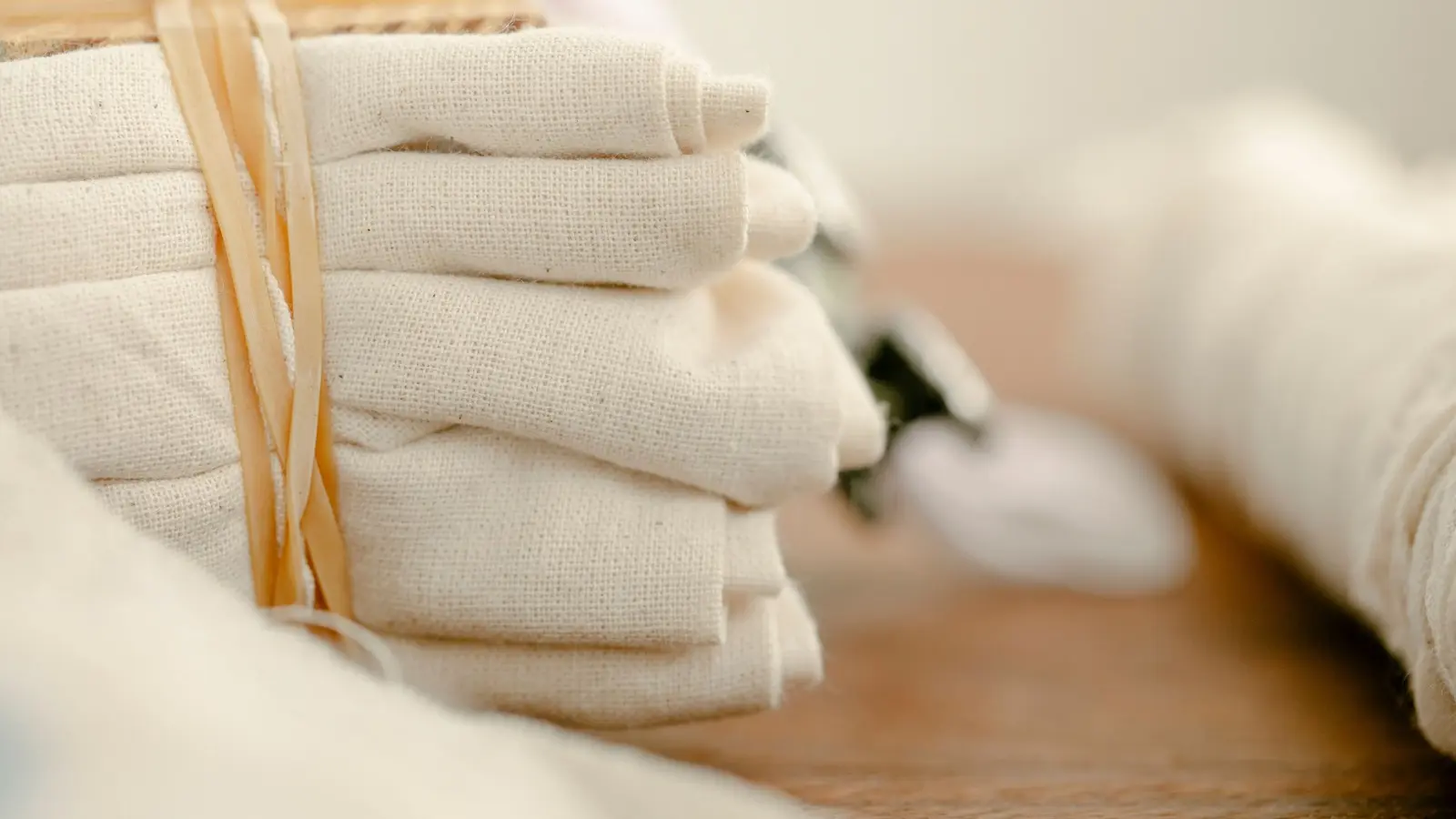
Cotton washcloths come in several constructions. Terry has raised loops that give it a plush surface. Waffle fabric has a small grid-like structure. Muslin-style cloths tend to be lighter and flatter, though multiple layers can add body.
If you enjoy a little cushion between your hand and your skin, cotton terry is a practical place to start. Check the edges as well as the middle: a soft center does not make a stiff decorative border comfortable. Embroidery, thick seams, and trims can change how the cloth feels in use.
Thickness has trade-offs. A substantial cloth may feel cozy, but it also takes up more drawer space and can need more drying time than a thinner cloth in the same room. Your bathroom’s airflow matters as much as the appealing word “plush” on a listing.
What Linen Washcloths Feel Like
Linen is made from flax fiber. Many linen cloths have a visible weave and a less fluffy surface than cotton terry. That can appeal to someone who prefers a lightweight, simple-looking bathroom textile rather than a miniature bath towel.
Do not assume every linen item is smooth or delicate. Yarn thickness, weave, and finishing can make one cloth feel supple and another quite crisp. Some linen fabrics become more relaxed with repeated laundering, but the starting texture still needs to suit you. You should not have to wait through months of washing to enjoy a basic washcloth.
Also read the composition carefully. A cotton-linen blend is not the same as pure linen, and the proportions may help explain its feel. A blend is not automatically a compromise; it may simply offer the combination of texture and flexibility you prefer.
Compare Construction Before Comparing Price
Look at the surface
Close-up photographs reveal loops, open grids, smooth weaves, and raised details. For a softer-feeling routine, favor a fine, flexible surface over dramatic texture. The cloth is there to make washing pleasant, not to turn a shower into a sanding project.
Check the dimensions and edges
A larger square can be easy to fold around your hand, while a smaller one takes up less room when traveling or laundering. Look for tidy stitching and edges that lie comfortably flat. If possible, handle one cloth before committing to a full set.
Read the laundry instructions
Choose something compatible with how you actually wash your towels. Compare permitted wash temperatures, drying directions, and any notes about shrinkage. A cloth that demands a separate care routine may be less convenient than a straightforward option you can keep in rotation.
Using Either Cloth With Handmade Bar Soap
Wet the cloth, add a little lather from your bar, and use a light touch according to the soap’s directions. More pressure and more texture are not the goal. If the cloth feels rough or uncomfortable, switch to a softer option or use your hands instead.
You can also build lather in your hands first rather than rubbing the bar repeatedly across a dense cloth. Different fabrics hold and release lather differently, so start with less soap and adjust to your preference. A large cloud of foam is not the only measure of an enjoyable wash.
For a closer look at the choice between using a cloth and skipping one altogether, read our hands vs. washcloth guide for bar soap. There is no requirement to add an accessory to a routine that already works for you.
Build a Small, Practical Rotation
Wash cloths regularly according to their care labels, rinse out soap after use, and hang damp fabric spread out rather than leaving it bundled on the shower shelf. Put freshly laundered cloths away only when fully dry. Give each person their own cloth and an obvious place to hang it.
For guests, place clean cloths within easy reach and provide a separate spot for used ones. This is more helpful than expecting visitors to guess which decorative stack they are allowed to touch. In a small bathroom, a light cloth that dries well in your actual space may be more practical than the thickest option available.
The Better Washcloth Is the One That Fits Your Routine
Cotton offers plenty of familiar, soft-feeling options; linen offers a different woven feel and an understated look. Start with one cloth, notice how it feels wet and after laundering, and expand your collection only if it suits you.
Pair that everyday choice with a scent and bar you enjoy. Explore Plumera’s handmade bar soap collection for a simple shower routine built around your preferences—not a cabinet full of extras. Beauty Through Simplicity can be as practical as a comfortable cloth and a well-chosen bar.