Bentonite Clay in Handmade Soap: A Simple Ingredient Guide
-
Posted by
Allison Savino
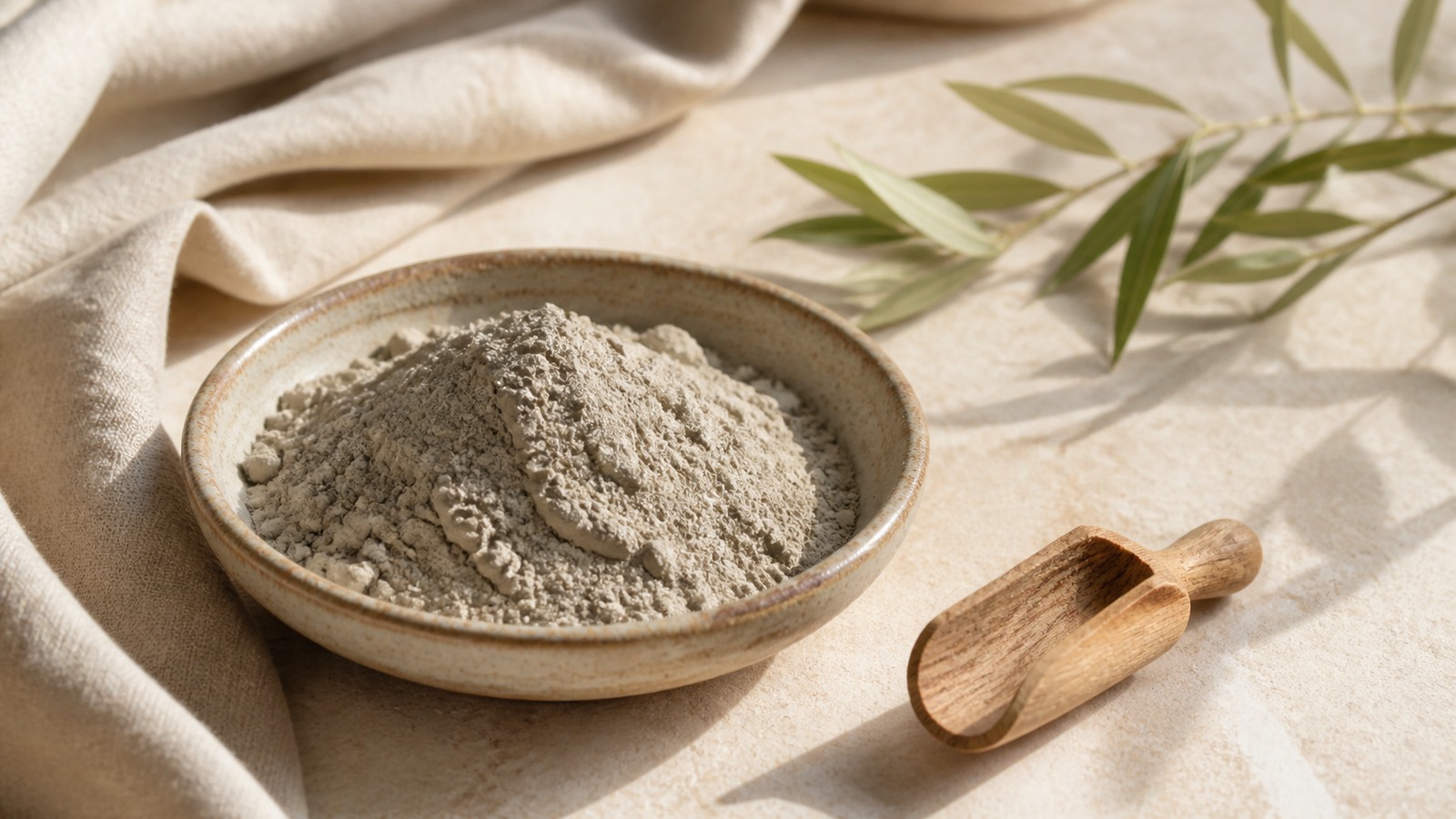
Clay may look quiet in a soap formula, but it can shape the way a handmade bar looks and feels. Bentonite clay is especially recognizable for its fine mineral texture and soft gray-beige color. In a maker’s hands, a modest spoonful can become part of a bar’s visual story without turning the ingredient list into a novel.
Still, clay ingredients are often surrounded by oversized language. The useful story is simpler. Bentonite is a naturally occurring mineral clay that soapmakers may choose for texture, slip, color, and creative design. Here is how it fits into handmade soap—and what shoppers can realistically notice in the finished bar.
What Is Bentonite Clay?
Bentonite is a fine clay formed as mineral-rich volcanic material changes over time. It commonly contains a clay mineral called montmorillonite, though the exact composition and color can vary by source. Dry bentonite powder may appear pale gray, warm beige, or slightly green-gray.
One of bentonite’s defining physical traits is its relationship with water. The powder takes up moisture and swells, which is why makers handle it thoughtfully when adding it to a formula. It may be dispersed in water or oil before it joins the soap batter, depending on the recipe and the maker’s process.
Why Do Soapmakers Use Bentonite Clay?
Ingredients earn their place in handmade soap for different reasons. Some build the base of the bar, some create scent, and others contribute to appearance or the experience of using it. Bentonite clay generally belongs in that last group.
It Adds a Fine Mineral Texture
When it is evenly dispersed and used in a measured amount, bentonite can give a bar a fine, mineral quality rather than a visibly gritty finish. The result depends on the full formula, so clay is one detail among many—not a guarantee that every bar will feel exactly alike.
It Can Add Slip
Soapmakers often describe bentonite as adding slip, meaning the lather can move smoothly across wet skin or a washcloth. That characteristic helps explain why clay sometimes appears in shaving-style bars as well as everyday soaps. The oils, butters, water level, and bar age all influence the finished feel too.
It Brings an Earthy Visual Note
Bentonite’s natural color can support stone, earth, cavern, forest, and spa-inspired designs. It may create a muted tone on its own or work alongside other clays and cosmetic colorants. A bar that contains bentonite does not have to be plain gray; the final palette reflects the complete design.
How Bentonite Clay Fits into the Soapmaking Process
Fine powders need careful mixing. If dry clay is added too quickly, it can form small clumps or thicken the batter faster than expected. Makers typically measure it for the batch and disperse it before blending it thoroughly into part or all of the soap mixture.
Timing matters when a design includes layers or swirls. A maker needs the batter fluid enough to pour while also keeping each color or texture where it belongs. Bentonite can be part of that creative balancing act, especially in a bar designed to resemble rock, earth, or natural strata.
After pouring, the soap still moves through the same broader stages as other cold-process bars: it rests in the mold, is cut into individual pieces, and spends time becoming firmer before wrapping. Clay is an addition to the craft, not a shortcut around it.
Bentonite Clay vs. Kaolin Clay
Bentonite and kaolin are both mineral clays, but they are not interchangeable twins. Kaolin is often white, cream, or softly tinted and is commonly chosen for a smooth, silky sensory note. Bentonite is usually more absorbent, can swell more noticeably when mixed with water, and tends to bring an earthier color.
A maker may choose one clay, combine several, or skip clay entirely depending on the desired bar. If you enjoy ingredient comparisons, Plumera’s guide to kaolin clay in handmade soap offers a useful companion read.
What Bentonite Clay Does Not Tell You by Itself
Seeing bentonite on an ingredient list does not reveal the whole personality of the soap. It does not tell you how strong the scent will be, how much lather the bar will create, how quickly it will soften in standing water, or whether you will enjoy the design. Those qualities come from the entire formula and how the bar is made and stored.
It is also worth keeping expectations grounded. Ingredient education should help you understand craft and sensory details, not ask one mineral powder to carry a dramatic promise. Look for clear descriptions of scent, texture, color, size, and ordinary use.
How to Read Bentonite Clay on a Soap Label
On a handmade soap ingredient list, bentonite may appear simply as “bentonite clay.” Read the complete list rather than stopping at the most familiar botanical or mineral. Oils and butters shape the soap base, scent materials create the aroma, and clays or colorants help build the finished look and feel.
Ask the maker what role the clay plays if the product description is unclear. A straightforward answer might mention texture, slip, color, or design inspiration. For more label-reading basics, use this handmade soap ingredient list guide as a shopper-friendly reference.
A Plumera Example: Cavern Glow Handmade Natural Soap
Plumera’s Cavern Glow design uses bentonite clay alongside French pink clay, ultramarines, iron oxides, and crushed amethyst gemstones. The combination supports a layered, mineral-inspired appearance drawn from the Shenandoah Caverns, while orchid, rosemary, and clove create its earthy-floral scent profile.
This is a helpful example of bentonite working as part of a complete concept. The ingredient is not presented alone; it joins the colors, textures, scent notes, oils, and butters that give the bar its identity. Explore Cavern Glow Handmade Natural Soap to see how the mineral theme comes together.
Simple Ingredient Knowledge, Better Soap Shopping
Bentonite clay brings a practical bit of geology to the soap table. It can contribute fine texture, smooth slip, and an earthy visual note, while giving makers another way to build a thoughtful design. Its role is interesting precisely because it is grounded in craft rather than spectacle.
The next time you see bentonite on a handmade soap label, look at the full picture: the base oils, scent, color story, format, and care directions. A well-made bar is always a conversation among ingredients. Clay simply gives that conversation a little more texture.