What Is Soap Beveling? A Simple Guide to Smooth Handmade Soap Edges
- Posted by
Allison Savino
A handmade soap bar may begin as a carefully measured formula, but its final personality often comes from the small steps that happen after the loaf is cut. One of those steps is beveling: gently removing the sharp corners from each bar to create a smoother, more finished edge.
It is a quiet detail, and many shoppers may never know its name. Still, beveling is a lovely example of what small-batch work does best. It gives the maker a moment to handle each bar individually, notice its natural variation, and decide how polished the final shape should feel.
What is soap beveling?
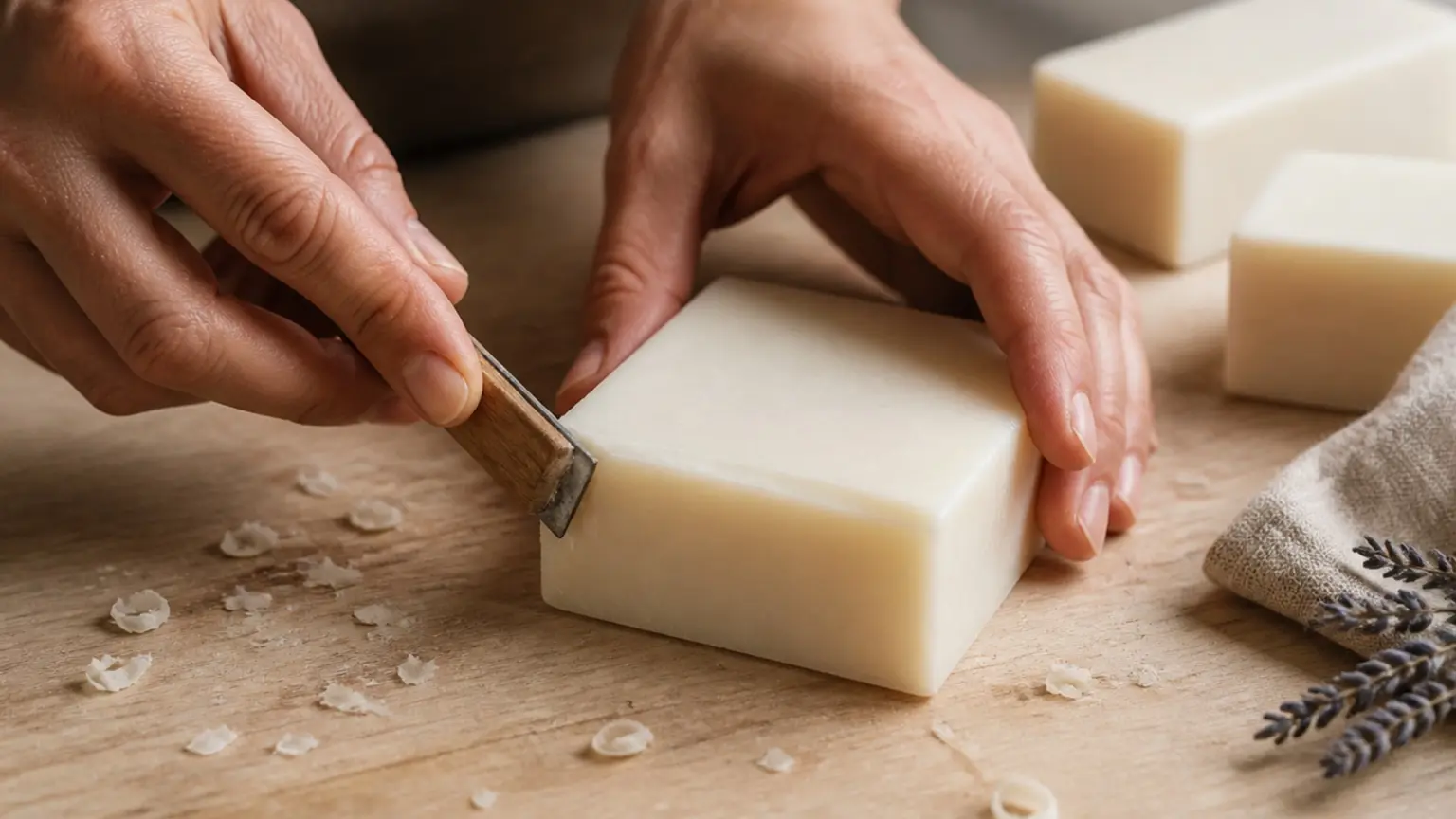
Soap beveling is the process of shaving a narrow strip from the edges or corners of a finished soap bar. The maker may use a dedicated beveling tool, a vegetable peeler reserved for studio use, or another simple edge-shaping tool designed for a steady, controlled pass.
The goal is not to reshape the entire bar. A bevel is usually subtle: just enough to soften a crisp corner and create a clean border around the face of the soap. Depending on the formula and the maker’s style, the finished edge may look softly rounded, neatly angled, or almost untouched.
Why do soapmakers bevel handmade bars?
1. To give the bar a polished finish
Freshly cut soap can have very square corners. Those edges can look modern and beautiful on their own, but a slight bevel adds a tailored finish. Think of it as the soapmaking equivalent of hemming a linen napkin: the essential work is already complete, yet the final detail makes the whole piece feel considered.
2. To make the first hold feel smoother
A beveled bar can feel comfortable in the hand from its first use because the corners have already been softened. Water and regular use will naturally round a bar over time, but beveling gives it a gentler starting shape.
3. To highlight small-batch craftsmanship
Beveling is often done one bar at a time. That hands-on step gives the maker another chance to inspect the surface, edges, color, and overall shape before the soap is wrapped or arranged for sale. It also complements the thoughtful process behind traditional cold-process handmade soap, where time and close attention matter at every stage.
When does beveling happen?
Beveling usually happens after the soap loaf has been cut into individual bars and the pieces are firm enough to handle cleanly. Timing can vary with the recipe, studio conditions, and the tool being used. If a bar is very soft, the tool may drag or leave an uneven edge. If it is extremely firm, shaping the corner may require more pressure than the maker wants to use.
That is why soapmakers learn to read the texture of a batch rather than follow one universal clock. The same small-batch awareness also appears when a soap loaf is cut into individual bars. Each formula has its own pace, and the finishing process works best when the maker responds to what is actually on the table.
Are all handmade soaps beveled?
No—and that is part of the charm. Some soapmakers prefer crisp, square edges. Others create rustic tops, textured sides, decorative layers, or shapes that do not suit a traditional bevel. A highly detailed bar may be left alone so its original design remains the focus.
Beveling is a style choice, not a quality test. An unbeveled bar can be every bit as carefully made as a beveled one. The formula, ingredient transparency, aroma, texture, and maker’s process tell you much more than the angle of a corner.
What happens to the soap shavings?
Because beveling removes only a slim ribbon from each edge, the shavings are usually small. In a thoughtful studio, they may be gathered instead of discarded with ordinary waste. Depending on the maker’s process, clean soap curls can be saved for personal use, combined into studio samples, or repurposed in another practical way.
The exact choice varies, but the idea fits naturally with a small-batch mindset: use materials with care, keep the process intentional, and avoid unnecessary excess wherever possible.
What should shoppers look for in a handmade soap bar?
A neat bevel is satisfying, but it should not distract from the qualities that shape the everyday experience. When choosing a bar, consider:
- Scent direction: fresh, floral, citrus, woodsy, sweet, or softly unscented.
- Texture: smooth and simple or designed with visible botanicals and decorative details.
- Size and shape: a bar that feels comfortable for your sink, shower, and hands.
- Ingredient information: clear labeling that helps you understand what is in the formula.
- Storage: a well-draining dish or soap saver that lets the bar dry between uses.
Plumera’s collection of small-batch handmade bar soaps makes it easy to explore different scent personalities while keeping the routine simple.
A small detail with a handmade point of view
Soap beveling does not change the heart of a formula. What it changes is the finish: the first impression of the edge, the way the bar sits in the hand, and the sense that someone paid attention all the way to the final pass.
That is the quiet appeal of handmade care. The best details do not need to announce themselves. They simply make an everyday object feel a little more intentional.
Ready to find a bar for your sink or shower? Explore Plumera’s handmade soap collection and choose the scent and style that fits your routine.